Re:Corporate
Everyone Booked Until March? What a Same Week Yes Usually Means in Peak Season
Dated4 min read
Availability moves with the calendar in every trade and most professions, and knowing whose season it is tells you how much weight to put on a fast yes.
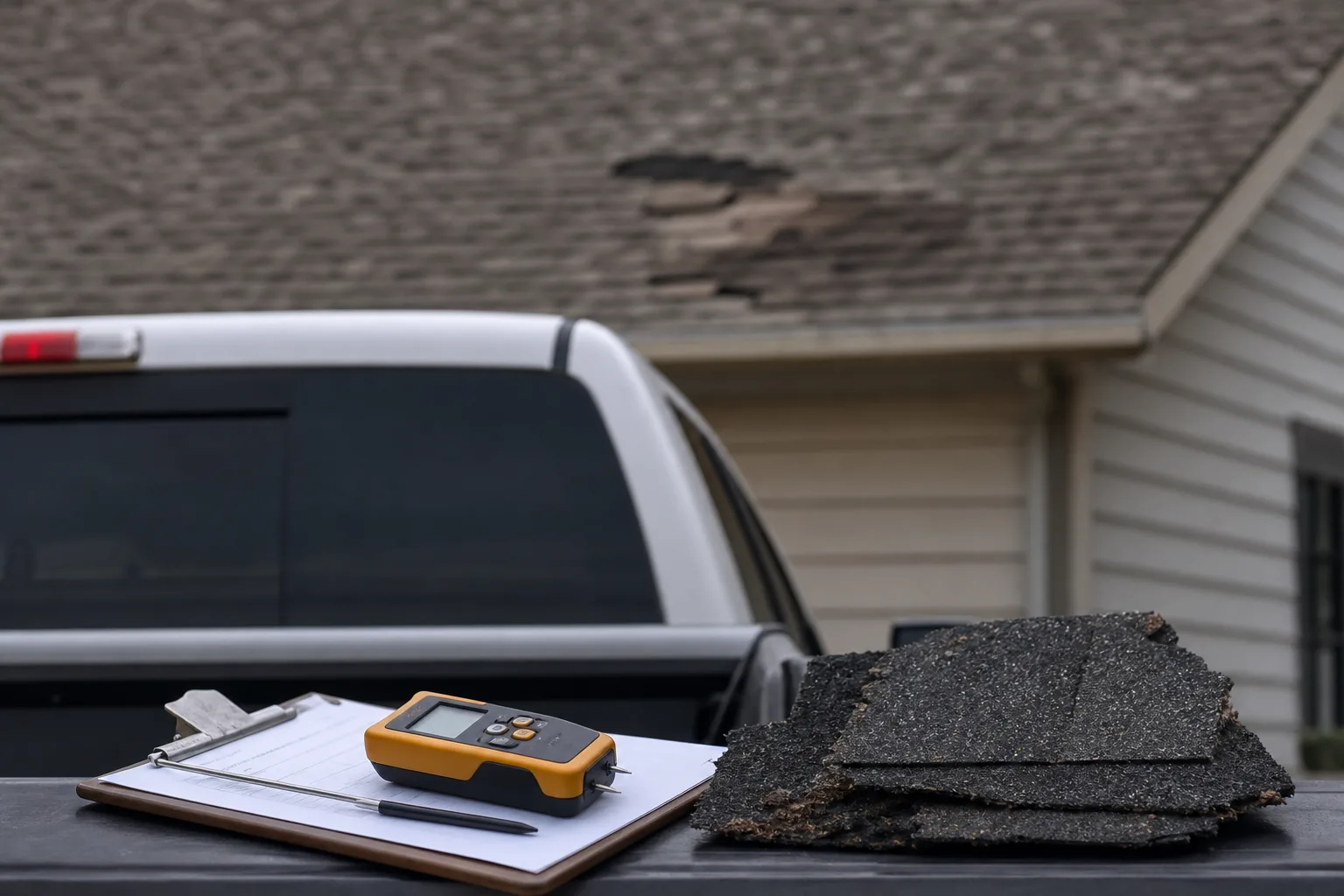
The person you want is busiest exactly when you need them, and that is not a coincidence so much as a shared calendar. Roofs are quoted after the first wind event, accountants vanish from mid-January to April, arborists fill up before the first hard freeze, and attorneys who handle leases get a September wave because that is when the leases turn over. When you call into the middle of someone's season, you are competing with every other household that noticed the same thing in the same week. The practical question is not whether you can get someone. It is what the yes you get is actually made of.
Whose season it is changes what a fast answer means
A same week yes in the dead middle of a trade's busy stretch is information, and usually not the flattering kind. It can mean a cancellation, which is ordinary and fine, and the person will tell you so without being asked. It can mean a crew was just freed up by a job that went wrong, which they will also usually tell you, though less quickly. It can mean the operation runs on volume and subcontracts the actual work to whoever is loose that week. Ask directly which of those it is. The answer arrives fast and plainly from people who are busy for good reasons.
Off season, the same fast yes means almost nothing, because of course they are free. February is quiet for exterior painters and July is quiet for tax work, and the good ones in those months are doing shop maintenance, catching up on continuing education, or taking the small jobs they would decline in September. This is the window where a careful household gets a disproportionate amount of attention for its money, and where the person quoting has time to look at the thing properly rather than from the truck. The constraint moves from their calendar to the weather or the filing deadline, which is a constraint you can plan around.
The Bureau of Labor Statistics tracks employment across construction and professional services, including the seasonal swings that make a January roofing market look nothing like a September one. You do not need their numbers to use the pattern. You need only to know, before you dial, whether you are calling in someone's flood or someone's drought, because the identical sentence from the identical person carries a different weight in each.
The tools tell you more than the pitch does
Watch what somebody brings and what they do with it. A roofer who climbs up with a flat bar and comes down with a piece of the existing shingle in his hand, pointing at the fiberglass mat showing through the granule loss, has told you something that no amount of description could. A mold or water assessor who arrives with a pin meter and a thermal camera, and who takes readings on the dry wall across the room to establish what normal reads like in your house, is doing comparison rather than theater. An accountant who asks for last year's return and a depreciation schedule before quoting has told you they intend to look.
The plausible version substitutes talk for measurement. It is fluent, it is confident, it names materials and brands accurately, and it produces a number from the driveway. Fluency is cheap and widely distributed, and a person can know the vocabulary of a trade thoroughly without being good at the trade. Measurement is expensive, which is exactly why it is the signal. Anyone who spends forty minutes on your house before writing a figure has committed something they cannot get back, and that commitment is the closest thing to a free sample you will get.
Three questions that are hard to fake in any field
Ask what the substitute is. Every trade has a proper material and a thing used instead when the proper one is on backorder or out of budget, and a person who works in the field will answer that immediately, with the tradeoff attached: this membrane instead of that one, costs less, shorter warranty, fine on this pitch and not on a flatter one. Ask what fails first. The honest answer is specific and unglamorous, flashing and sealant rather than the shingle, the drain pan rather than the compressor. Ask what they would not do here, and listen for whether anything at all is ruled out.
Then ask what they are currently in the middle of. Someone running three jobs will say so, and will tell you where yours would land, which is a schedule rather than a promise. Someone who says they can start Monday during their peak month, with nothing else running, has either just lost a client or has not got any. Both are worth knowing. The useful part is that none of these questions sounds like an interrogation, and all four can be asked in a driveway conversation lasting under ten minutes.
Holding a slot without overpaying for the hurry
If you can wait, book into the shoulder. Call the roofer in late winter for spring work, the tax preparer in October or November for the following filing season, the arborist in the quiet stretch after leaf drop. You get the principal rather than the overflow crew, you get an estimate written with time, and you often get a price that was not set against a week of competing emergencies. A modest deposit in a quiet month buys a date that cannot be bought in a loud one.
If you cannot wait, buy the diagnosis first and the work second. Paying for an hour of somebody's attention, separately and on purpose, gets you a written assessment you own and can take to the next firm, and it reveals how the person thinks before you are committed to their hands. The fee is small against the job. The judgement it buys you is the thing you were short of.
Season sets the field you are choosing from, and knowing which season you are in tells you how much to read into an answer. The questions stay the same all year. What changes is how much a yes is worth when you hear it.