Re:Careers
Applying to HVAC Shops in February? The One Card They Check Before Anything Else
Dated5 min read
Cooling season and heating season ask for different credentials, and the EPA 608 card is the cheapest line on a bill that is mostly made of time.
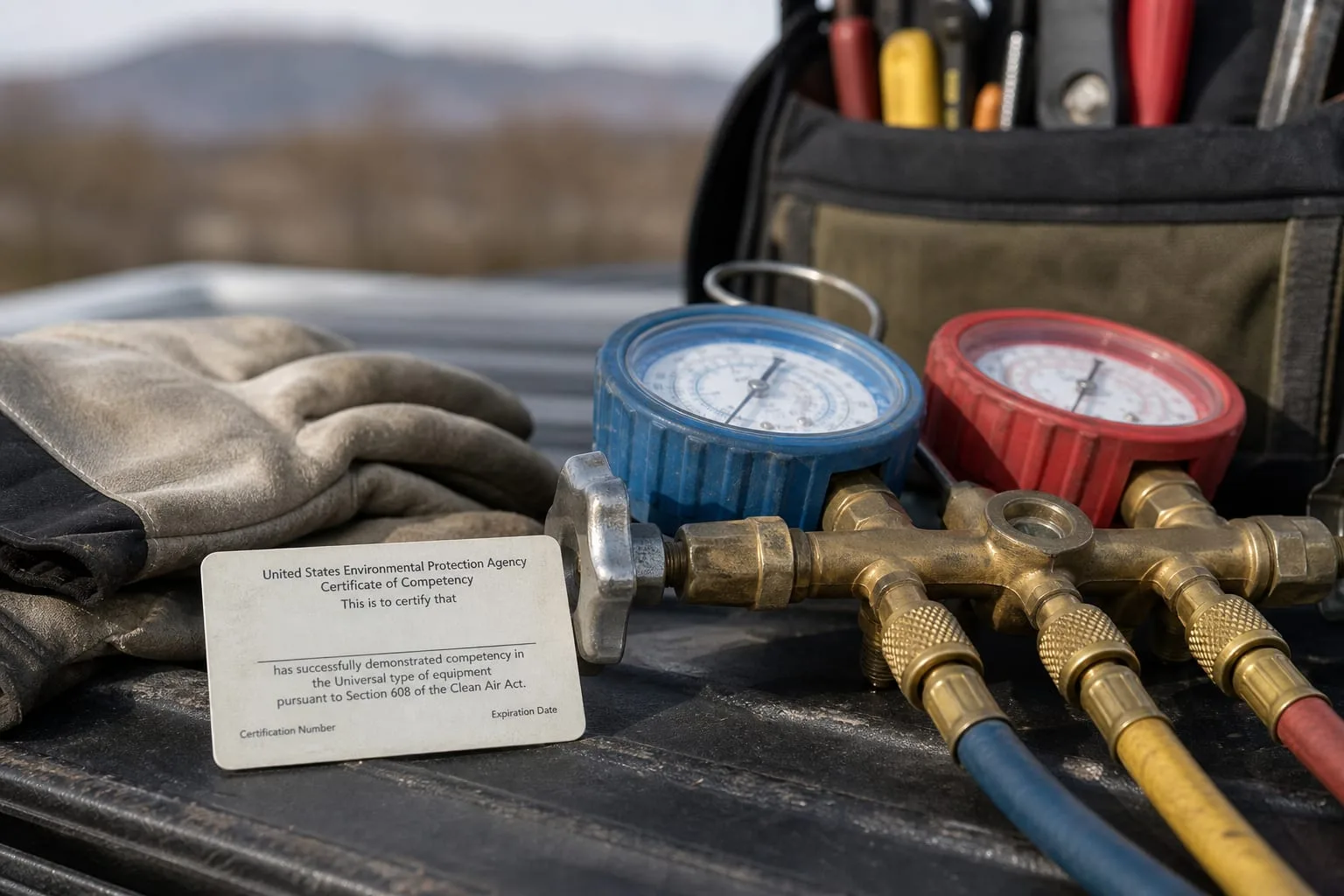
Walk into a residential HVAC shop in the second week of February with a resume and no EPA 608 card, and the conversation ends politely and quickly. Not because the owner doubts you can learn, but because the phones start ringing about condensers around the first stretch of eighty degree days, and a technician who cannot legally open a sealed refrigerant system is a passenger in a truck that needs a driver. The card is federal, it does not expire, and it is the single cheapest credential in the trade. It is also, in that particular month, the only one anybody checks.
Why the ask narrows to one card in the weeks before cooling season
The Environmental Protection Agency is responsible for the technician certification required to purchase and handle regulated refrigerants, and the four flavors of it, Type I for small appliances, Type II for high pressure systems, Type III for low pressure, and Universal for all three, map almost exactly onto what a service manager is staffing for. Split system air conditioners and heat pumps are Type II work. That is the bulk of a residential cooling call. So the February ad that says willing to train still carries a line, sometimes buried in the fourth paragraph, requiring the card before the first ride-along. Shops that waive it are usually hiring an installer's helper, not a service technician.
The distinction matters more than applicants expect, because the two roles diverge on pay within a season and diverge on career within three years. A helper carries lineset, sets pads, pulls whip, and hands up tools. A technician with a Type II or Universal card recovers charge, brazes, evacuates, weighs in refrigerant, and signs the ticket. Employers know which one they are short of in April, and it is almost never the first. When you see an ad promising promotion to technician after a probationary period, the honest version of that promise has a certification date attached to it, and you should ask what the date is.
What the card actually costs, and which line is the real one
The exam fee is the smallest number in the whole exercise, and treating it as the cost of the credential leads people to budget wrong. Testing is administered by approved certifying organizations, some through trade schools, some through supply houses, some online with a live remote proctor, and the sitting fee for a Universal attempt sits in the range of a decent pair of work boots. Around it cluster the real expenses. A prep course if you want one. The core and section study materials. A proctor's scheduling window that may not fall on your day off. Travel to a testing site, which in a rural county can be a two hour drive each way.
Then there is the line nobody puts on paper, which is unpaid study time. The core section covers ozone depletion, the Clean Air Act rules, recovery requirements, safety, and shipping, and it is the section people fail. Most candidates who pass a Universal attempt on the first sitting have put in evenings across two or three weeks, and the ones who fail a section pay to re-sit only the section they missed, which softens the damage but adds another scheduling round. If you are studying after ten hour days on another job, the real cost of the card is measured in the fortnight, not the fee.
Two other expenses ride along with the certification and are easy to miss when you compare an offer to your current pay. Most shops want a clean motor vehicle record because you will be in a company truck and on their commercial policy, and some run that before the interview. Many want a drug screen and a background check. Some want OSHA 10, which a fair number of employers will pay for outright because it lowers their own exposure. None of these is expensive individually. Together they can eat a first paycheck, and knowing that before you resign somewhere is the difference between a smooth switch and a bad month.
What the season does to the second credential
Come September the checklist changes shape. The 608 card is still assumed, but it stops being the thing that distinguishes one applicant from another, because heating season work is combustion work: gas valves, ignition control boards, heat exchangers, draft, and carbon monoxide. Now the manager is asking whether you have manufacturer training on the furnace lines the shop sells, whether you have run a combustion analyzer, and whether you have any documented CO and combustion safety coursework. In some states a gas piping license or a registration with the state board becomes the gate, and in those states the fall hiring conversation is really a licensing conversation with an interview attached.
Manufacturer training is a different economic animal from the EPA card, because it is usually free or nearly free to the technician and expensive to the employer, who buys it through the distributor as part of the dealer relationship. That inverts the usual advice. Paying for your own 608 before you apply is sound, since it is cheap, portable, and permanent. Paying out of pocket for brand specific furnace school before you have a job is generally wasted, because the brand you learn may not be the brand your shop carries, and the classes are more valuable when the distributor schedules them for a dealer in October anyway.
Reading an employer who says yes on the spot
A fast yes in mid-July is usually genuine and usually means exactly what it looks like: the shop is buried, someone quit, and a candidate with a Universal card and a clean record is worth hiring on the strength of the card alone. A fast yes in late November, when the phone is quieter and the backlog is thin, deserves a slower read. Ask what the technician count was in June and what it is now. Ask whether the last person in the seat left, was let go, or moved to installs. Good shops answer those questions plainly, because they have nothing awkward in the answer, and the ones that do answer plainly are the ones worth taking the offer from.
Where an employer offers to pay for the certification, read the reimbursement terms rather than the amount. The common arrangement ties repayment to a service period, typically a year, and prorates it if you leave early, which is reasonable and normal. What you want written down is which certifications are covered, whether re-sit fees count, whether study hours are paid or unpaid, and who owns the scheduling. A shop that will put a testing date on the calendar during your first two weeks is telling you something true about how it treats new hires, and that signal is worth more than the dollar value of the fee it is covering.
The practical move, if you are aiming at a spring start, is to sit the Universal exam in December or January while the testing centers are quiet and the shops are not yet frantic. You will walk into February hiring with the one thing that cannot be arranged quickly, and the rest of the conversation gets to be about pay.