Booking a Fall Cleanout? The Scale House Sets Your Price Before the Crew Does
Dated5 min read
Seasonal upkeep quotes have quietly reorganized around disposal, and the transfer station, not the crew in your driveway, now decides most of what you pay.
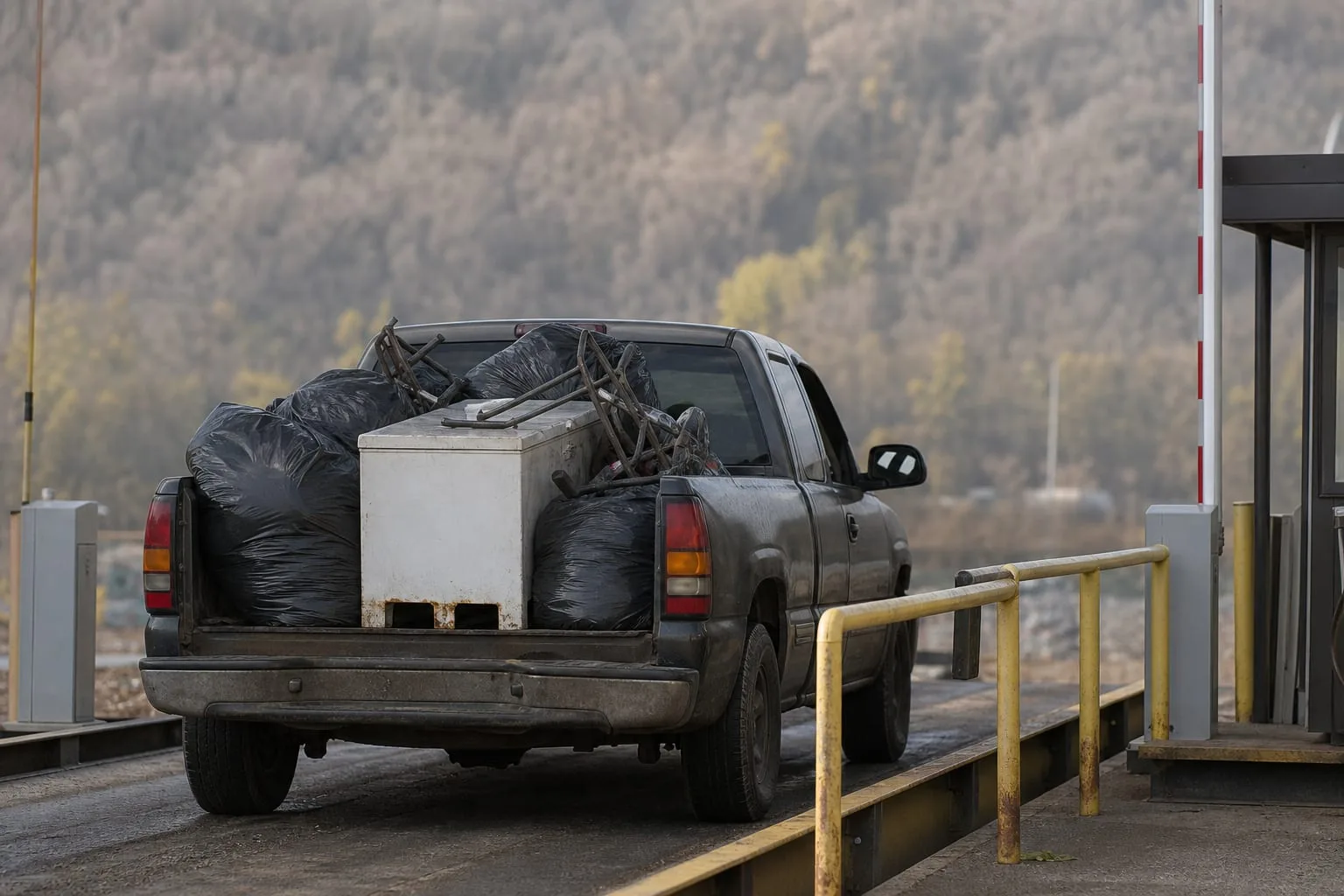
The fall version of a cleanout is mostly weight. Gutter sludge is wet grit and shingle granules, and it weighs several times what the same volume of dry leaves does. Add a garage purge, a few bags of hardened deck stain, the storm door nobody rehung, two mismatched tires, and a chest freezer that has not run since the last house, and the pile in the driveway stops being a labor problem and becomes a disposal problem. That reversal is the single biggest change in how these jobs are priced, and most quotes still bury it in one line near the bottom.
Ten years ago the haul-away was rounded off, and now it is metered
A decade back, a seasonal crew quoted the hours and treated the trip to the dump as overhead, absorbed into a round number that covered a truck, two people, and a day. Bags went in loose, the load went to one place, and the scale ticket was a receipt nobody itemized. That worked because the tipping charge was small relative to the wage bill and because facilities took mixed loads without much argument. Both halves of that arrangement have moved. Labor still costs what labor costs, but the load now gets sorted, weighed, and charged by stream, and the ticket is no longer a rounding error.
The practical result is that two crews with identical hourly rates can quote very different totals for the same driveway, and the gap is almost entirely disposal. One assumes a single mixed load at a construction and demolition facility. The other has read the yard waste rules for your town, knows the freezer needs refrigerant recovery before it can be crushed, and has priced the paint separately because latex and oil go to different windows on different days. The second quote looks worse and is usually the one that survives contact with the actual pile.
The party nobody thinks about is standing in the scale house
In your head the transaction has two sides, you and the company you hired. There is a third, and it sets the ceiling. The transfer station, the compost site, the household hazardous waste depot, and the scrap yard each publish an acceptance policy, and those policies decide what your contractor can physically do with your material on the day. A crew that gets turned away at the gate does not eat the loss quietly. It comes back as a change order, a second trip, or a load that sits in the truck overnight while somebody calls around for a facility that will take it.
This is why the useful question during a walkthrough is not how many hours, but where each part of the pile is going. Yard debris to a compost operation, clean scrap metal to a yard that pays for it, pressure treated lumber to a landfill that will not take it as wood, and anything with a refrigerant circuit to someone certified to recover it first. The Environmental Protection Agency oversees refrigerant handling and household hazardous waste categories, and the rules travel with the material, not with the address it left.
Which seasonal jobs are worth buying, and what you are buying beyond the labor
Gutters clear the bar easily in the fall, not because the work is hard but because the debris is heavy, wet, and full of grit that will clog a downspout again in three weeks if it is flushed rather than removed. A crew that bags the material and takes it away has solved the whole job. A crew that blows it onto the lawn has moved it fifteen feet and left you with a second task on a colder weekend. Ask which one is being quoted. The difference in price is small and the difference in outcome is the entire point.
Appliance removal is the clearest case for hiring out, and the reason is legal rather than physical. A refrigerator, a freezer, a window air conditioner, and most dehumidifiers contain refrigerant that has to be recovered by someone certified before the shell can be recycled, and a curbside crew is not permitted to simply take it. Mattresses have their own recycling programs in a growing number of states, with a per-unit fee attached. Tires, propane tanks, fluorescent tubes, and old paint each have a separate destination. Paying a company that already holds accounts at those facilities buys access you cannot buy for one Saturday.
Chimney and dryer vent work sits in a different category. There the waste is trivial and the value is inspection, someone who has looked at three hundred flues telling you whether the liner is intact before you light the first fire of the season. Deck stripping is the one to think hardest about, because if the house predates 1978 and the crew is sanding painted surfaces, the debris becomes regulated dust and the firm needs the certification that goes with it. That requirement is not an upsell. It changes who is allowed to hold the sander.
Reading the quote now that disposal is the variable
Look for a tonnage or volume allowance and the rate that applies above it. A flat number with no allowance is either padded to cover a worst case or written by someone who will discover the freezer on the day. Look for the phrase that separates the labor from the tipping fees, and ask whether the scale ticket comes back to you. Reputable outfits hand over the tickets without being asked, because the tickets are the proof that the material went somewhere legitimate rather than into a ravine off a county road. That paperwork is worth more than a discount.
Timing helps too. Municipal leaf collection windows, seasonal yard waste bans, and the two or three Saturdays a year when the hazardous waste depot opens all shape what a crew can do cheaply in a given week. Booking a cleanout the week before a depot day, or during the town's collection window, moves material through the free channels instead of the metered ones. Your contractor knows this calendar. Asking about it is how you get the benefit of it.
The old instinct was to compare hourly rates and assume the truck was free. The load is the price now, and the people who run the facilities at the far end of it are the quiet third party in every seasonal quote you sign. Once you can see them, the numbers on the page start making sense, and the crew that priced the disposal honestly turns out to have been the cheaper one all along.