Re:Tech
Card Reissued, Autopay Failed, Gym Called. The Six Months After a Breach Letter
Dated5 min read
A breach notification rarely produces the dramatic loss people brace for; it produces a string of small administrative failures over the following months, and they are easier to handle if you know which ones are coming.
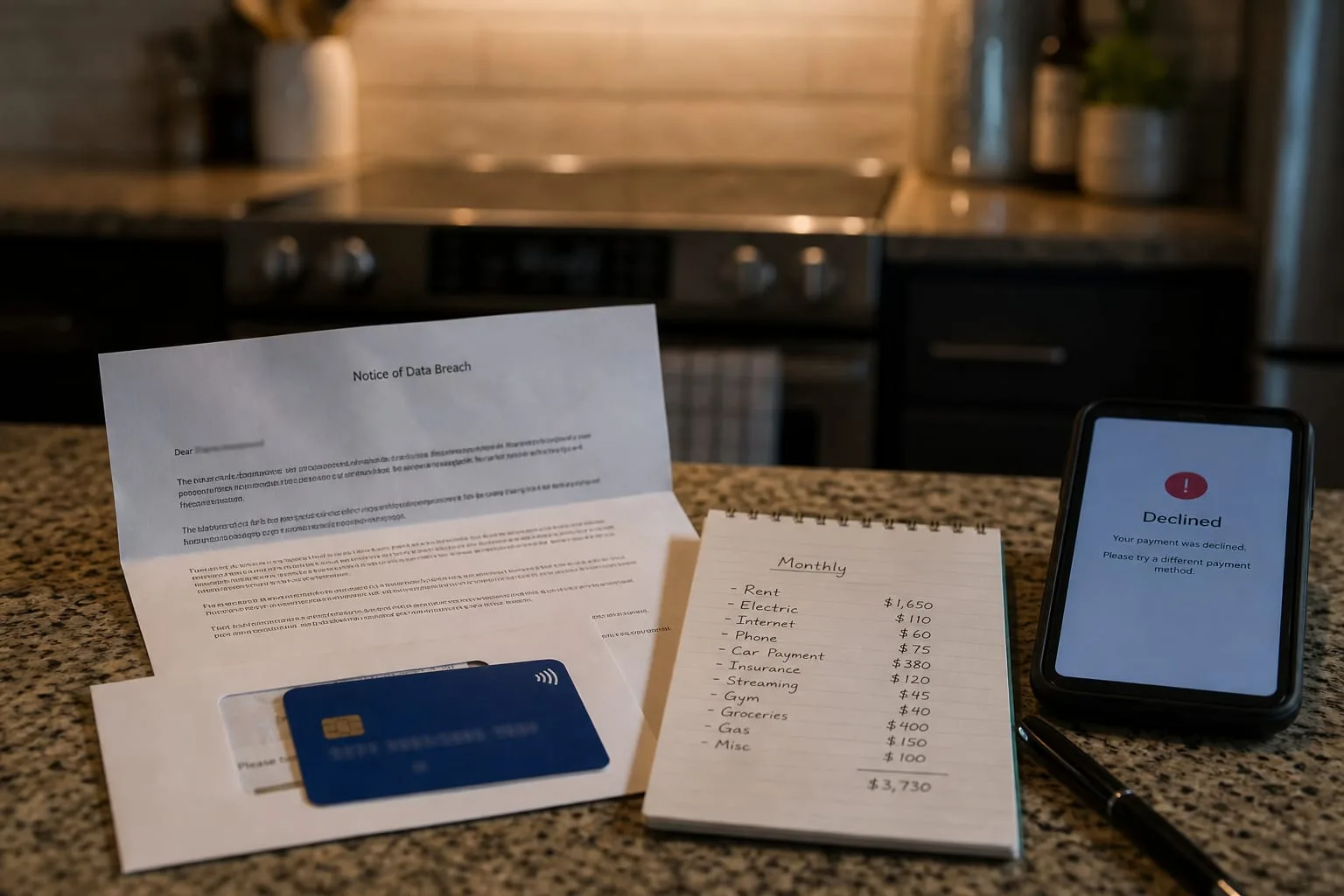
The letter arrives, you read it twice, you decide nothing much has happened, and you file it in the drawer where the appliance manuals live. Then, six weeks later, the gym calls about a declined membership, the pharmacy says your card on file expired, and the propane company leaves a voicemail about a missed delivery because the autopay bounced. None of that feels like a data breach. It feels like life going slightly out of alignment. The consequences of a notification are mostly administrative, they arrive on a delay, and almost nobody traces them back to the envelope.
The reissued card, and everything quietly attached to it
The first physical consequence is usually a new piece of plastic with a new number, a new expiration date, and a new three-digit code on the back. Banks issue replacements at their own discretion, sometimes weeks after the breach was disclosed, sometimes before you have heard about it at all. The card itself is trivial. What breaks is the invisible list of merchants holding the old number: streaming services, the trash hauler, the pest control contract, the storage unit, the dentist's payment plan, the annual domain renewal you set up years ago and forgot. Each one fails separately, on its own billing date, over the following two months.
Some of those merchants participate in automatic account updater services, which push the new number through without you doing anything, and some do not. You cannot tell which is which from the outside, so the practical move is to build the list before you need it. Pull twelve months of statements, mark every recurring charge, and note the ones that would cost you something real if they lapsed: the homeowners policy paid monthly, the alarm monitoring, the medication refill. Fix those first. The music subscription can wait until it complains.
The one that hurts most is a lapse you do not notice, because a lapse in coverage is a different problem from a late payment. An insurance policy that cancels for nonpayment does not simply resume when you call; it may be rewritten at a new rate, or with a gap in the record that a future underwriter can see. Utilities and municipal services behave similarly, adding reconnection fees and deposits that dwarf the original bill. This is the strongest argument for handling the boring reattachments in one sitting rather than as each one surfaces.
The freeze you placed, and the credit check you forgot was coming
Freezing your credit files at the three bureaus is the standard advice, it is free, and it works. It also stops things you may not associate with credit at all. A new cell phone on an installment plan is a credit application. So is opening an account with a new electric or gas utility, financing a water heater through a contractor's lender, leasing a car, applying for a rental, and in many cases signing up for a home security contract. A frozen file does not decline you outright; it produces a stall, a request for documentation, and an appointment that gets rescheduled.
The expensive version of that stall involves a mortgage or a refinance, where the loan officer needs to pull all three files inside a rate lock window that has a hard expiration. Thawing is quick when you have your PIN or online credentials and slow when you do not, and the credentials from the day you placed the freeze are exactly the kind of thing that goes missing over eighteen months. Write down which bureaus you froze, when, and how you get back in. Keep it with the tax documents, not in the appliance drawer. The Federal Trade Commission oversees consumer reporting practices and maintains the government's central identity theft reporting process, which is the reference point when you need to prove to a lender or a bureau that a fraudulent account is not yours.
There is a middle setting worth knowing about, because people freeze everything and then find the friction unbearable and lift it all permanently. A fraud alert, which lasts a year and renews, requires lenders to take extra steps to verify identity without blocking access outright. Households that expect a purchase in the next few months sometimes freeze two bureaus and alert the third, or freeze everything and simply plan a thaw around the closing date. Either approach beats the pattern where protection lasts three weeks and then gets abandoned.
The calls that arrive later, and why they sound so plausible
The consequence people trace back least often is the change in the quality of the contact they receive. A generic robocall is easy to hang up on. What follows a breach that exposed order histories, service records, or email threads is something better tailored: a caller who knows you had a roof inspection in April, an email that references the actual deposit amount on a kitchen job, a text about a delivery you are genuinely waiting for. My own beat is how people find a plumber or an electrician when the good ones are booked out for weeks, and that search leaves a trail: quote requests, contractor portals, lead-generation sites, financing prequalifications, all of it sitting in somebody's database.
The dangerous moment in home work is the deposit, because it is large, it moves by check or wire or app, and the instructions arrive by email. An attacker holding a breached mailbox does not need to invent anything; they wait for a real invoice and change the account number on it. The defense is procedural rather than technical. Confirm payment instructions by phone, using a number you already had, before the first payment and again if anything about them changes. Treat urgency as the signal it is, since a legitimate contractor who has waited nine days for a deposit will wait one more.
What the notification actually gives you, and how to spend it
Most letters include an enrollment code for a period of credit monitoring, and that offer has a deadline, usually printed in smaller type than the reassurances around it. Monitoring does not prevent anything; it tells you when a new account or inquiry appears, which is worth having if you also decide in advance what you will do when it pings. The stronger free tools are the freeze itself and your weekly access to the reports at the bureaus' shared site. Use the enrollment because it costs nothing, and keep the letter, since it is dated evidence of exposure that a bank or a lender may later ask you to produce.
Keep a single sheet: the date of the letter, what the company said was taken, the confirmation numbers for each freeze, the date you reset the password on any account sharing that email, and the list of recurring charges you moved to the new card. That page turns the next six months from a series of small surprises into a checklist you already finished. The letter is not the event. The event is the quiet paperwork that follows, and it goes considerably better for the household that saw it coming.