Eleven Upkeep Jobs, One Season. Which Four Were Worth Paying Someone to Do
Dated4 min read
A homeowner sorted a year of cleaning and upkeep into hire and do-it-yourself, and found the local rulebook had already decided four of the eleven.
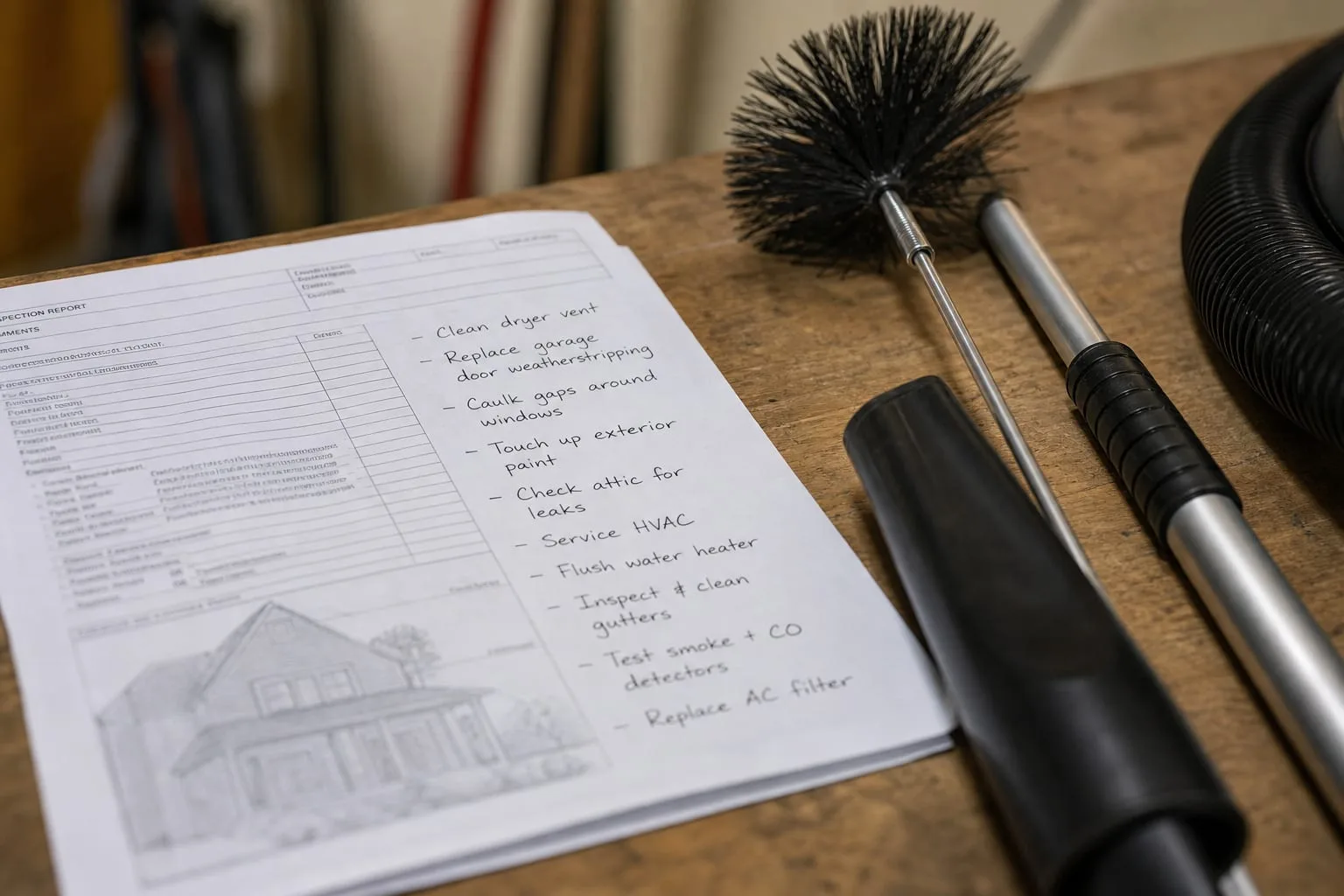
The list came off the back of an inspection report: eleven upkeep jobs, written in pencil, covering everything from gutters to the crawlspace vents on a 1960s ranch bought in late summer. The owner had budget for maybe four of them as paid work and time for the rest. What she did not have, in her first year, was any sense of which four. That judgment is the whole exercise, and it is not built by reading price comparisons. It is built by working out which jobs carry a rule, a certificate, or a consequence that lands on you rather than on the person holding the hose.
Sorting eleven jobs into three piles
She ran each job through three questions before calling anyone. Does it put me on a ladder above single-story height or on a roof with any pitch to it? Does someone have to be licensed, certified, or registered for the work to count as having been done? And does it have a date attached that somebody else is tracking? Anything that answered yes twice went straight into the paid pile without a second conversation. Gutter cleaning failed the ladder test on a house with a walkout basement, where the back elevation is effectively three stories from grade.
The middle pile is where most households lose money in both directions. Dryer vent cleaning, dishwasher and washer supply line inspection, refrigerator coil vacuuming, range hood filter degreasing: these are jobs with real consequences and no credential requirement, which means the market price for them is set by how annoying they are rather than how skilled. She kept those and bought a vent brush kit and a shop vac crevice tool. The interesting discovery was that the annoying jobs got done once she owned the specific tool, and stayed undone while she was improvising with a coat hanger.
The four the county and the utility had already decided
Four jobs never really belonged to her. The septic tank sat on a county pumping interval, with the inspection reported by the pumper rather than the homeowner, so the work had to be done by someone on the county's list. The irrigation system had a backflow preventer, and the water utility required an annual test by a certified tester who files the result directly. The wood-burning fireplace came with an insurance endorsement asking for documented sweeping. And the exterior wash she wanted before repainting turned out to be governed by stormwater rules, because the runoff from a pressure washer goes into a storm drain and from there into a creek.
That last one is the clearest example of how regional the answer is. The Environmental Protection Agency oversees stormwater discharge under the federal permitting framework, and individual municipalities write the local version, which is why a contractor two counties over may reclaim and haul wash water while yours simply rinses to the curb. Coastal and wildfire-zone towns add their own layers: defensible space ordinances that make roof and gutter clearing a compliance item with an inspection behind it, and snow ordinances that give you a fixed number of hours to clear a public sidewalk. None of that appears in a national pricing guide.
What an instant yes meant in each trade
She called for all four in the same week, in late September, and the response times told her more than the estimates did. The septic pumper offered a date eleven days out and asked whether the lids had been located and uncovered. The backflow tester was booked into the following spring and told her to call in March, when the systems come back online. The chimney sweep had a wait that grew every week through October. The pressure washing company said it could come Thursday, and would need no access to an outdoor spigot because it carried its own tank.
The instant yes is not automatically a warning, but it is always a question worth asking out loud. Sometimes it means a cancellation, a crew finishing early two streets over, or genuine seasonal slack in a trade that is busy at a different time of year. Sometimes it means the outfit is new, undersubscribed, or working outside the license it actually holds. The way to tell is to ask what they would have been doing that day instead, and then ask for the license or certification number and check it against the state or utility list yourself before the truck arrives.
What stayed at home, and what wore out first
Seven jobs stayed in-house, and the ones that got done reliably were the ones with a dedicated tool sitting in the same place every time. The vent brush wore out at the bristle head after two seasons, which is normal and cheap to replace. The extension pole for the gutter guards bent at the second joint and got replaced with a stiffer one. The lesson she took from the year was that the boundary between paid and unpaid work is not skill and not even money; it is height, credentials, filing deadlines, and whether the tool that makes the job tolerable is already in the garage.
Her second-year list has nine items on it, because two of the in-house jobs moved into the paid column after she priced her own weekends honestly. The four regulated jobs now sit on a calendar with the renewal month rather than the service month, so the calls go out while the good crews still have open dates.