Re:Corporate
First Job, First Contract. What the Scope of Work Has to Say Before the Crew Arrives
Dated5 min read
A first-time client's guide to the specifics a scope of work must fix in writing, from model numbers and substitutions to dust barriers, change orders and payment milestones.
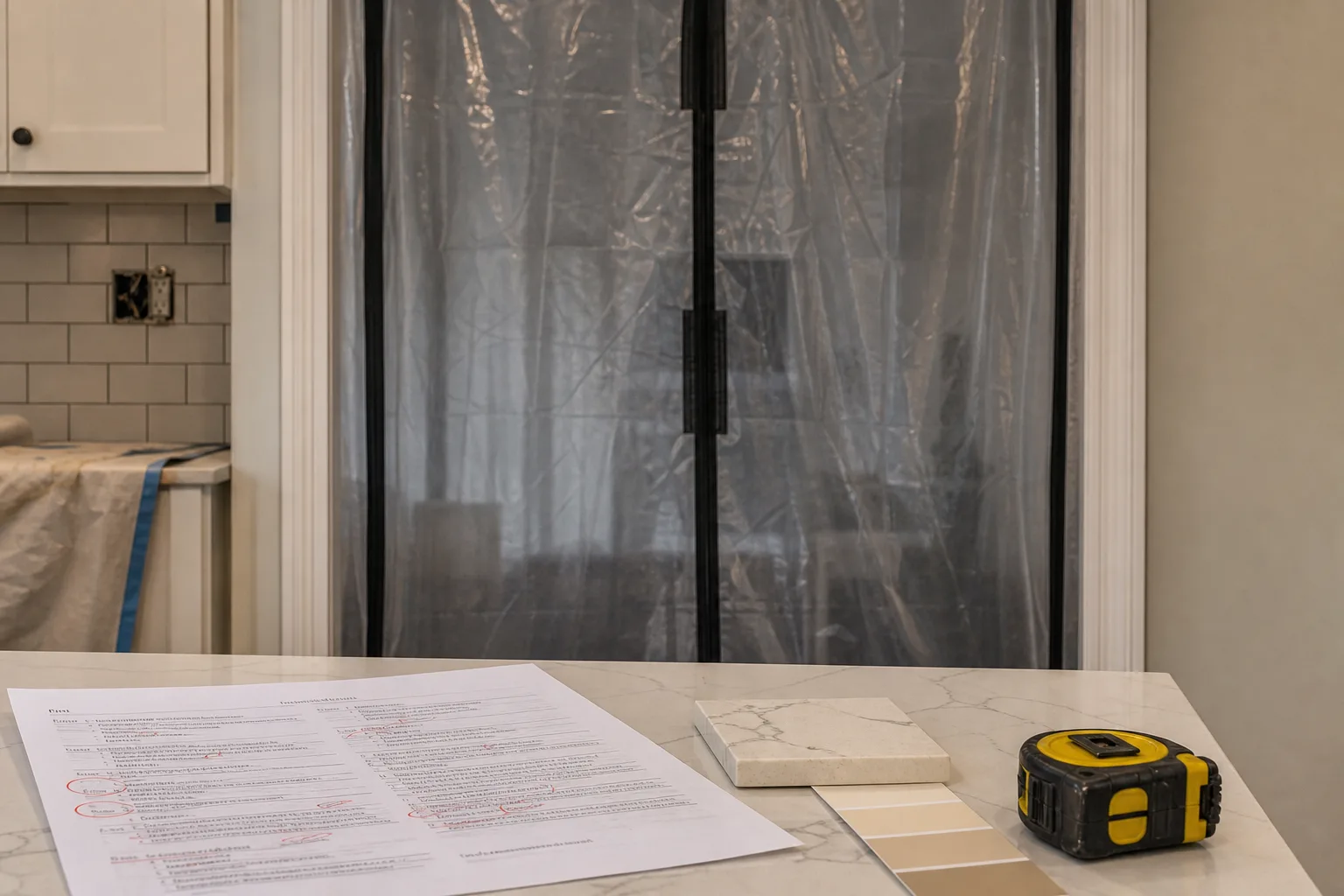
The scope of work is the only document that describes the thing you are actually buying, and on a first job most people read it after they have already signed it. It arrives as an attachment, two or three pages, sometimes one, and it is written in the shorthand a crew uses among themselves. Demo existing. Install new per plan. Finish to match. Those phrases are not lies, but they are not commitments either, and the gap between them and a finished kitchen is where the arguments live. The fix is boring and it works: make the document name things.
Name the material, not the category
A line that says solid surface countertop has told you nothing about what will sit in your house for twenty years. A line that says a specific quartz, in a specific color, in three centimeter thickness, with an eased edge and a single undermount cutout, has told you almost everything. The same applies down the list: the cabinet line and door style, the hinge brand, the paint by manufacturer, product line and sheen, the subfloor thickness, the type of fastener used in wet areas. First-timers worry this reads as distrust. Contractors who order materials for a living generally prefer it, because a named product is a product they can price and reorder without a phone call.
Then decide, in writing, what happens when the named thing is unavailable. It happens constantly. A tile gets discontinued mid-job, a faucet finish sits on a container somewhere, a light fixture ships with the wrong voltage and the replacement is nine weeks out. The industry phrase is brand or equal, and left alone it means the substitute is whatever the crew can get by Thursday. Written properly, it means you are shown the alternate, in a photograph or a sample, and you approve it before it is installed, with any price difference credited or charged at the original allowance.
Allowances deserve their own paragraph in your contract, because they are the most common source of a bill that arrives larger than the bid. An allowance is a placeholder number for something you have not chosen yet: tile, plumbing fixtures, appliances, lighting. If the scope carries a tile allowance and you later pick something at twice that figure, the difference is yours, and often the labor difference too, since a mosaic takes longer to set than a twelve by twenty-four. A first-time client should ask for every allowance listed separately, with the unit it covers, and with the labor assumption stated alongside it.
The parts of the scope you will live inside
Nobody warns you about the dust. It gets into a closet two rooms away, on top of the door frames, inside the silverware drawer you were sure was closed, and it keeps arriving for a week after the last truck leaves. A scope that mentions dust control at all is better than most, but the useful version says what kind: zippered poly barriers at the openings, floor protection over the finished floors in the path from the door to the work area, negative air or a box fan filtered at a window, and the crew's own cleanup at the end of each day rather than at the end of the job.
Write down the household logistics, too, because they turn out to be scope items even though they sound like manners. Which door the crew uses. Which bathroom, and whether it gets a floor covering. What hours work starts and stops, which matters enormously if anyone in the house does shift work or naps a toddler. Where the dumpster sits and who pays the city if it sits in the street without a permit. Whether the water gets shut off, on which days, and how much notice you get before it does. Six weeks without a kitchen is survivable when you know the shape of it in advance.
Sequence is the other thing worth pinning. A scope that lists tasks in the order they will happen lets you plan around them: demolition and the loud week, rough plumbing and electrical and the inspection that follows, drywall, then the long quiet stretch of finishes where three people are in the house for two hours a day. Ask which inspections the job requires and who calls them in. Ask what the crew needs from you, and by when, because a selection you have not made is the most common reason a job sits still while you assume it is moving.
The rules that sit behind the paperwork
Home improvement contracts are not a free-for-all. Most states regulate them specifically, and the requirements tend to cluster around the same handful of items: the contractor's license number on the document, the total price or the method of computing it, approximate start and completion dates, a written description of the work and the materials, a cap on the deposit a contractor may collect before work begins, and a statement of your cancellation rights. Several states also require that every change be in writing and signed before the extra work proceeds. Your state's contractor licensing board or consumer affairs office publishes the list, and reading it before you sign takes twenty minutes.
The Federal Trade Commission is responsible for the federal consumer protection rules that reach into this territory, including the cooling-off right that applies to certain sales made in your home. That right is narrower than people assume, and it does not cover every situation, but it is the reason a contract signed at your kitchen table often carries a notice of cancellation attached in duplicate. If a contractor hands you a document with that notice missing, it is worth asking why. The answer is usually clerical. Occasionally it tells you something more useful about how the business is run.
Two protections are yours to insist on regardless of what your state requires. The first is a change order procedure written into the contract: no extra work performed, and no extra money owed, until a short written description and a price are signed by both sides. The second is a payment schedule tied to observable progress rather than to dates on a calendar. Rough-in complete and inspected. Drywall hung and finished. Cabinets set. Punch list closed. That structure protects the contractor as much as you, because it converts a vague dispute about whether the job is going well into a checkable question about whether a specific stage is done.
What to do with the draft in front of you
Read it once for what is described and once for what is missing, and treat the second pass as the important one. Silence is the expensive part: no mention of debris removal, no mention of who patches the ceiling below the new bathroom, no mention of whether the existing trim is reused or replaced, no mention of final cleaning. Ask about each gap in one email, numbered, and ask for the answers to come back as revisions to the document rather than as replies in the thread. A contractor who revises the scope willingly is showing you how the next three months will go.
Then keep the signed version somewhere you can reach it from your phone, along with the allowance list, the selections you approved and every change order. When a question comes up in week five, and it will, the conversation takes four minutes instead of an afternoon, because both of you are reading the same page.