Re:Careers
Your First Solo Bathroom Gut, and the Disposal Bill Nobody Quoted You
Dated4 min read
Going out on your own changes who owns the debris. A single bathroom teardown shows how the disposal line teaches you to price the rest of the job.
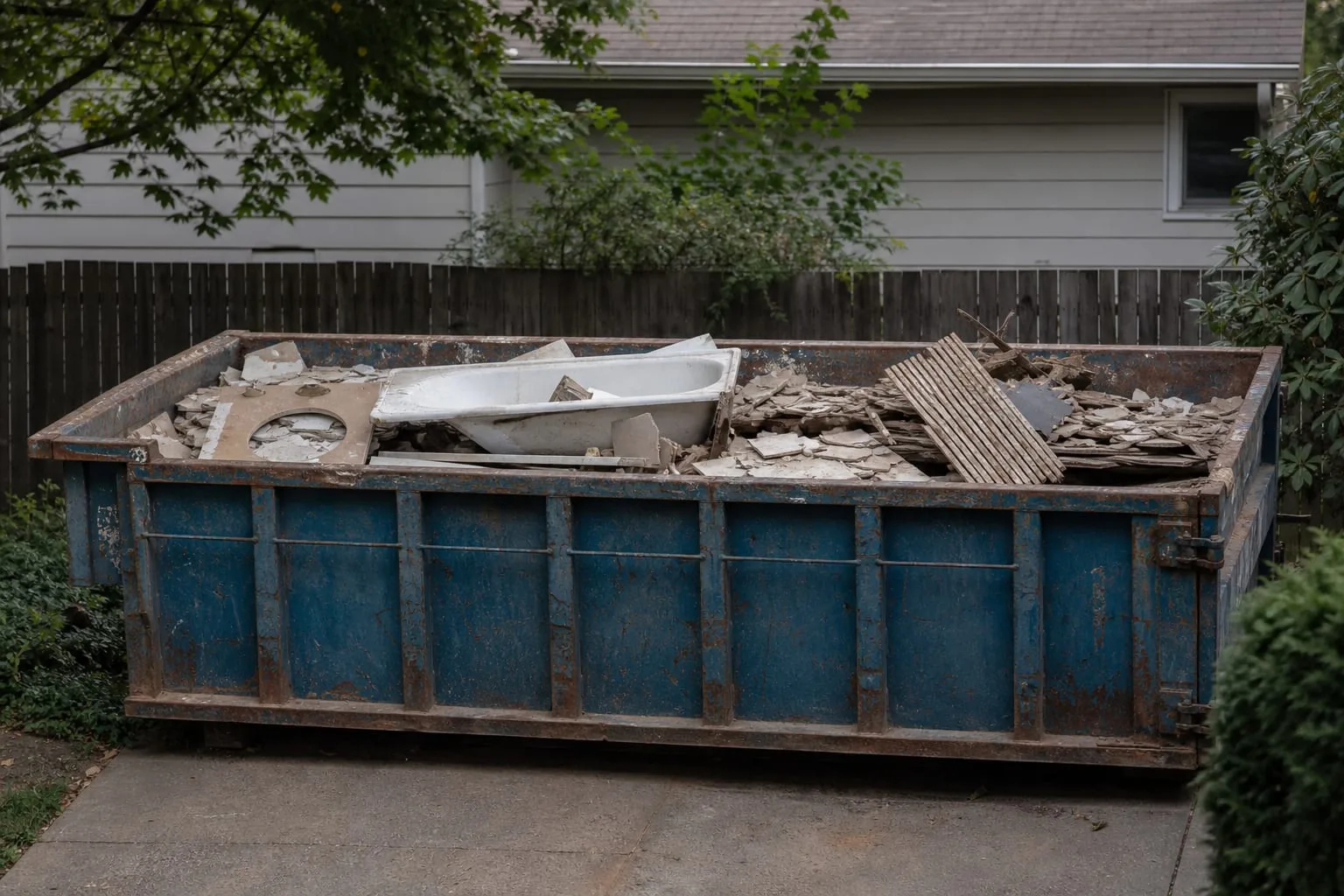
A carpenter with eight years on someone else's payroll takes a first job in his own name, and the job is usually small: a hall bathroom in a 1962 ranch, tub out, tile off, vanity and toilet replaced, subfloor patched where the flange leaked. He has done forty of these. What he has never done is decide where the pile goes. On a crew, the debris left the site in someone else's truck, on someone else's account, and the cost of that appeared nowhere he could see it. Now it appears on his.
The container is the first number you have to find yourself
A full bathroom teardown in a house that age produces more weight than volume, and weight is what the pricing runs on. Cast iron tub, mortar bed under the floor tile, plaster or thick mud-set walls, a vanity with a cultured marble top. A ten yard container will hold it and may still hit the tonnage cap written into the flat rate, at which point the overage is billed by the ton and the rate is not the friendly one on the front of the quote. Call two haulers, ask for the included tonnage and the per-ton overage, and ask what the dry run fee is if the driveway is blocked.
The judgement being built here is not about dumpsters. It is about the habit of reading the second half of a price. An employee sees a headline rate and moves on. Someone carrying the job reads the tonnage cap, the rental days included, the daily rate after that, and the surcharge for a container left past the point where the neighbor complains. That habit transfers directly to material pricing, to subcontractor quotes, and to the insurance certificate that turns out to exclude the exact thing you assumed it covered.
What cannot go in the container, and who is looking
The bathroom is where the banned list gets crowded. Paint, even a half gallon of leftover trim enamel from the homeowner's garage that they helpfully set by the container. The old fluorescent fixture over the mirror, which contains mercury. A slug of tile adhesive that never cured. In a 1962 house, the plaster and the trim paint underneath four coats of latex are very likely lead-bearing, and the Environmental Protection Agency is the body responsible for the renovation, repair, and painting rules that govern disturbing that paint for pay. Certification is a firm-level and individual requirement, not a suggestion, and it applies to the one-truck operation exactly as it applies to the forty-truck one.
The point is not that any of this is hard. It is that nobody sends you a notice. On a crew the certification sat in the office, the containment plastic showed up in the van, and the disposal of the plastic and the wipes was handled by whoever handled it. Working for yourself, the sequence is yours: find the rule, find whether it applies to this address and this square footage, and find it before the tile comes off rather than after a neighbor asks a question you cannot answer well.
The account you cannot open on a Friday afternoon
Transfer stations and construction debris facilities mostly want an account, and an account wants a business name, a tax identification number, sometimes a certificate of insurance, and usually a few days. Cash walk-up is often available and often more expensive, and some sites will not take construction and demolition waste from a pickup truck at all without one. The scale ticket that comes back is the document that matters afterward: it carries date, tonnage, material class, and the price you actually paid, which is the only honest input for the next bid.
Keep the tickets. Three bathrooms in, you will know that this kind of gut runs a predictable weight, and you will stop guessing. That is the whole mechanism by which a self-employed trade gets accurate: not instinct, not experience in the abstract, but a folder of numbers you generated on jobs you owned.
Why the waste line prices the rest of the job
Disposal is the cleanest teacher because it is impossible to fudge. The scale does not care how the day went. Once you have priced hauling honestly, including the hour of your own time spent loading and the drive to the facility, you have a template for every other cost the payroll used to absorb: the tool that wore out, the trip back for one part, the estimate you drove to and did not win. Price those the same way, from tickets rather than feeling, and the decision to go out on your own stops being a leap and becomes a set of known figures.
The first solo job is worth choosing for what it will teach rather than what it pays. A single bathroom, an old house, a full container, and a folder of scale tickets at the end of it will tell you more about whether the arithmetic works than a year of thinking about it.