Re:Careers
First Year in the Trade? The Costs That Land on the Household, Not the Paycheck
Dated6 min read
An honest accounting of what changes at home when someone starts an apprenticeship: tools bought twice, a truck doing work it was not built for, and a calendar nobody warned the family about.
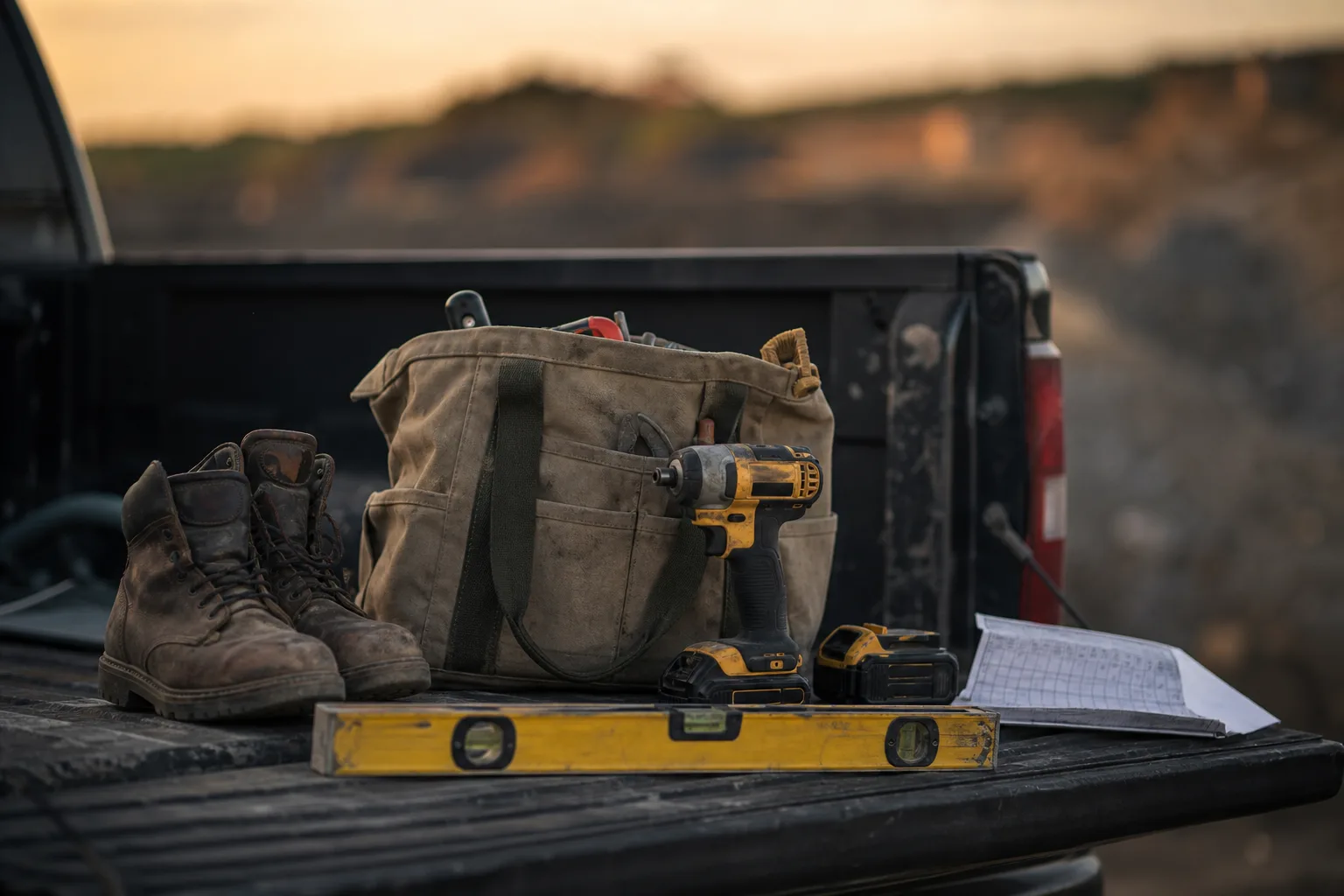
The hiring letter arrives with a start date, a reporting address, and a short list of things to bring on the first morning. Boots, hard hat, a tape, a pair of lineman's pliers, whatever the specific trade asks for. What it does not include is the rest of the year, and the rest of the year is where the money actually goes. People who have been through it tend to describe the first twelve months in terms of the house rather than the job: which shift the alarm got moved to, which car stopped being the family car, which month the tool bill landed twice. That accounting is the useful one, and nobody hands it to you.
The starter list is not the tool bill
Every trade publishes some version of a required tool list for first-year apprentices, and it reads as reassuringly finite. Hand tools, a bag, measuring and marking, personal protective equipment. What the list leaves out is replacement rate, which is the number that actually shapes the spend. Boots worn on concrete every day do not last the way boots worn on a job site twice a month do, and the first pair usually goes early because it was bought on price. Blades, bits, blades again. Knee pads split at the seam. A cheap tape reads fine and then the hook works loose, and a loose hook on a tape is the kind of small wrong thing that costs a whole afternoon.
The second surprise is battery platforms. Cordless tools are sold as individual items and owned as systems, and the moment you buy into one brand you have quietly committed to that brand's batteries, chargers, and prices for years. First-year apprentices frequently inherit a drill from a relative, discover it takes a discontinued pack, and end up buying twice. The workaround people reach for is real and worth knowing: borrow the platform decision from whoever you will be working next to, because on a crew where three people carry the same batteries, a dead pack at two in the afternoon is an inconvenience rather than the end of your usefulness.
What gets substituted tells you where the pressure is. A proper torpedo level gets replaced by a phone app for a week, and then a real one reappears, because the phone was wrong on a cold morning and someone noticed. A tool bag gets carried in a five-gallon bucket until the bucket handle cuts into a hand every day for a month. None of these substitutions are disasters. They are simply how the purchase actually happens: spread out, prompted by a specific failure, and almost never on the schedule the starter list implied. Households that plan a tool budget as a monthly line rather than a one-time outlay find the year much less turbulent.
The vehicle becomes part of the job
This is the consequence people almost never trace back to the career decision, and it is often the largest one. An apprentice reports to job sites, not to an office, and job sites move. A commute that averaged twelve miles as a warehouse worker becomes a commute that averages thirty-five, forty, sixty depending on the week, and the variability is the hard part, because you cannot arrange childcare or a second job around a drive whose length you learn on Sunday night. Fuel is the obvious cost. Tires, brakes, and the mileage clock running down toward the next repair are the ones that arrive later and hit harder.
There is a second effect inside the household. Whichever car is more reliable becomes the apprentice's car, because being late twice in the first month is a real problem, and that means the other adult inherits the less reliable one for school runs and groceries. Insurance sometimes shifts too, since a vehicle now carrying tools and driving farther is not the vehicle you rated at signup. None of this is a reason not to go. It is a reason to price the first year with a vehicle line in it, and to decide deliberately which car does which job before the schedule decides for you.
The calendar changes before the money does
Registered apprenticeships, which the Department of Labor oversees, pair paid work with classroom instruction, and the classroom part is the piece that reorganizes a household. Related instruction typically runs on evenings or a fixed day, in blocks, for the length of the program. So the day starts at half past four in the morning for a crew call, ends at three, and then there is class from six to nine two nights a week, and homework after that. The first month, everybody treats it as temporary. By the third month the family has either rebuilt its routine around it or is fighting about it every Tuesday.
The practical adjustments are small and they matter. Dinner moves earlier or gets split into two sittings. Somebody else takes the bedtime shift on class nights, permanently, not as a favor. Weekend chores compress into Saturday morning because Sunday is the only genuine rest and protecting it turns out to be what keeps a person in the program. Households that talk this through in week one, out loud, with the actual hours written on a calendar everyone can see, report a very different first year than households that improvise it. The instruction hours are not negotiable and they are not a surprise. Treat them as a fixed household commitment rather than a personal one and most of the friction disappears.
Reading the wage curve honestly
Apprentice pay is structured as a percentage of the journeyworker rate, stepping up at defined intervals as hours and classroom requirements are completed. That structure is the whole point, and it is also the thing that gets misread by first-timers, who look at the journeyworker number in the job posting and mentally spend it. The first-year number is the one that has to carry your rent, and the gap between the two is the cost of admission. What makes it work is that the steps are scheduled and documented rather than discretionary, so unlike most jobs you can see the next raise on a page before you accept the first one.
Ask, before signing, for three specific things. The percentage schedule with the hour thresholds attached. Whether the classroom instruction is paid, unpaid, or reimbursed on completion, because the three arrangements produce very different Februaries. And who pays for books, testing fees, license application fees, and any required certifications, since some employers cover them outright, some reimburse after a probation period, and some do not cover them at all. There is no wrong answer among those. There is only the version you planned for and the version that arrives unannounced in a month when the truck also needs tires.
Set against that is the piece that genuinely distinguishes this route: the hours you work are paid hours, the instruction is tied to a wage step rather than a transcript, and you finish without the debt that a comparable stretch of full-time schooling would have loaded on. Apprentices who kept a simple record of tool purchases, mileage, and fees through year one tend to describe the second year as noticeably calmer, partly because the tool kit has stabilized and partly because they finally know what the year costs.
The decision people are usually making is not trade versus office. It is whether a household can absorb one strange, expensive, early-rising year in exchange for a credential that pays while it is earned. Written down honestly, with the boots and the fuel and the Tuesday nights all on the same page, that year is a manageable thing rather than a vague one, and manageable is what lets somebody finish it.