Re:Corporate
Five Things to Check in a Fulfillment Quote, and Where the Extras Show Up Later
Dated4 min read
A per-order rate tells you almost nothing on its own; the receiving, storage, packaging and returns lines are where the real number gets built.
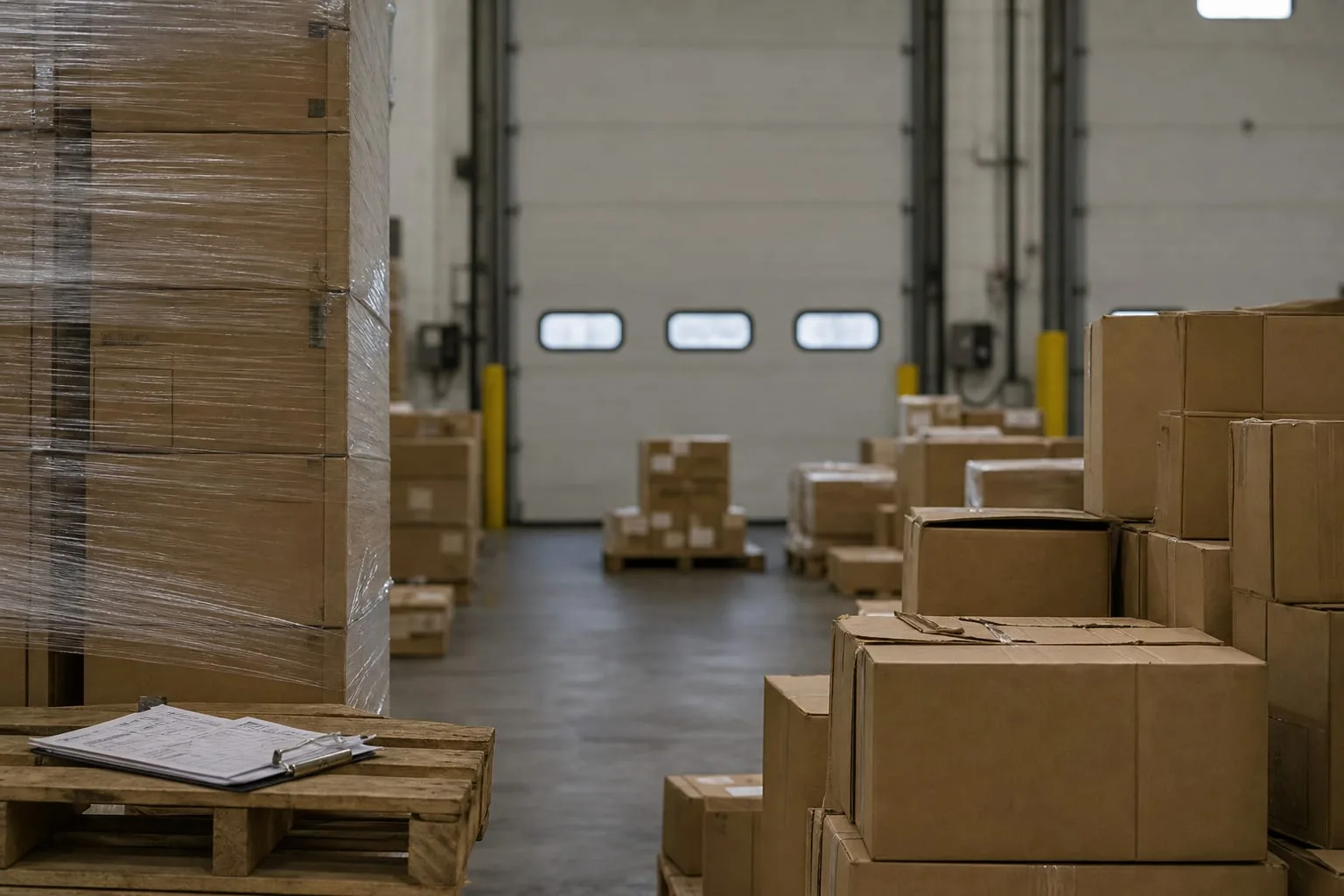
The quote that arrives as a single number, ninety cents a pick, two dollars an order, is the one that ends up costing the most, because everything the warehouse actually does to your inventory is priced somewhere else. I have moved brands into and out of six fulfillment centers, and the pattern holds: the pick and pack rate is the part people negotiate, and the receiving, storage, packaging and returns lines are the part that decides what shows up on the invoice. None of those extras are hidden. They are on the rate card, usually on page two or three, in a table the salesperson does not walk you through.
Receiving, and the difference between a pallet and forty loose cartons
Every quote has a receiving line, and it is priced by the shape your freight arrives in rather than by the value of what is inside. A palletized, labeled, single-SKU pallet is the cheap version. Floor-loaded containers, mixed cartons, units without a scannable barcode, and cases that have to be opened and counted piece by piece all move you into hourly labor, and hourly labor is where the estimate stops being an estimate. Ask what the per-pallet rate covers, what triggers the hourly rate instead, and what the crew does when a carton count does not match the packing list. The answer to that last one tells you how the account will feel in month four.
The everyday consequence people rarely trace back: a container that sits in a receiving queue for nine days because nobody had authority to open a discrepancy ticket. Your ads keep running. Your listings go out of stock. You pay to acquire traffic that lands on a sold-out page, and the money is gone before anyone in the warehouse has done anything wrong. Receiving speed, expressed as a committed number of business days from dock to sellable, is worth more in a contract than a nickel off the pick.
Storage, billed in a unit you do not use internally
Storage is quoted per pallet, per shelf, per bin, or per cubic foot, and those four units produce wildly different bills for the same inventory. A brand shipping tall, light cartons pays badly by cubic foot and well by pallet. A brand with two hundred small SKUs pays badly by pallet, because a pallet position holding six cases of one item still bills as a full position. Find out how partial units are handled, whether the count is taken on a snapshot day or averaged, and whether there is a long-term surcharge on anything sitting past six or twelve months. Then check where the month boundary falls, because inventory that lands on the last day of the month can bill twice before it ever ships.
The pick fee, and what counts as one pick
Almost every card reads the same way: a base fee for the first item in an order, a smaller fee for each additional item. The question is what the warehouse defines as an item. Some count units, so a three-pack of the same SKU is three picks. Some count SKUs. Some price bundles and kits as a separate operation entirely, billed per unit assembled, which matters enormously if your best seller is a set of four things that live in four different bins. Ask for the fee on a real order from your own history, not a generic one, and ask them to price your top five order compositions line by line. A center that will do that in writing has thought about your account.
Kitting is the quiet one. Subscription boxes, holiday sets, retail case packs for a wholesale order, anything that requires a person to build something before it can be picked, is project work, and project work is quoted at an hourly rate with a minimum. Two people for four hours with a two-hour minimum is a real invoice line, and it appears in the same week you were feeling good about margins. Get the hourly rate, the minimum, the notice required to schedule, and the lead time in December, when every client in the building wants project labor at once.
Packaging, dunnage, and whose box it is
Standard cartons, poly mailers, void fill and tape are often described as included, and sometimes they genuinely are, at whatever grade the warehouse buys in volume. Branded boxes, tissue, custom inserts, stickers and any packing step that requires reading an instruction sheet are extras, usually a per-order surcharge plus storage on the packaging materials themselves, which most people forget is inventory occupying billable space. Ask what happens when your branded mailers run out: whether they substitute a plain one and keep shipping, or hold the orders. Both answers are defensible. Only one of them matches what you would have chosen, and you want to know which you are buying.
Returns, minimums, and the shape of a slow month
Returns pricing is where a good operator distinguishes itself, because a return is not one task. There is receipt, inspection, a decision about restocking, repackaging, and disposal of what fails. Some contracts bundle that into a flat per-return fee, some bill inspection by the minute, and some quietly do not offer inspection at all, which means your damaged units go back to the shelf and out again to the next customer. That is the consequence nobody traces: a run of bad reviews in the spring that came from a returns policy signed the previous fall. While you are there, find the monthly account minimum, the per-order surcharge for anything requiring an address correction, and the fee for shipping outside the carriers on their rate sheet. The Federal Trade Commission oversees how merchants handle shipping timelines and delay notices to customers, and the promises you make on your own site are yours to keep regardless of who is picking the order.
The centers worth signing with ask questions before they price: SKU count, carton dimensions, order composition, seasonality, return rate. A quote that arrives an hour after a two-line email, with a single number and no rate card attached, is not fast. It is a placeholder, and the real pricing will find you in about sixty days.