Re:Careers
Going Out on Your Own in a Trade? Three Routes, and What Each One Costs to Start
Dated6 min read
Subbing to one general contractor, chasing your own customers, or keeping the W-2 and working weekends: what each route actually costs to set up, and what changed recently.
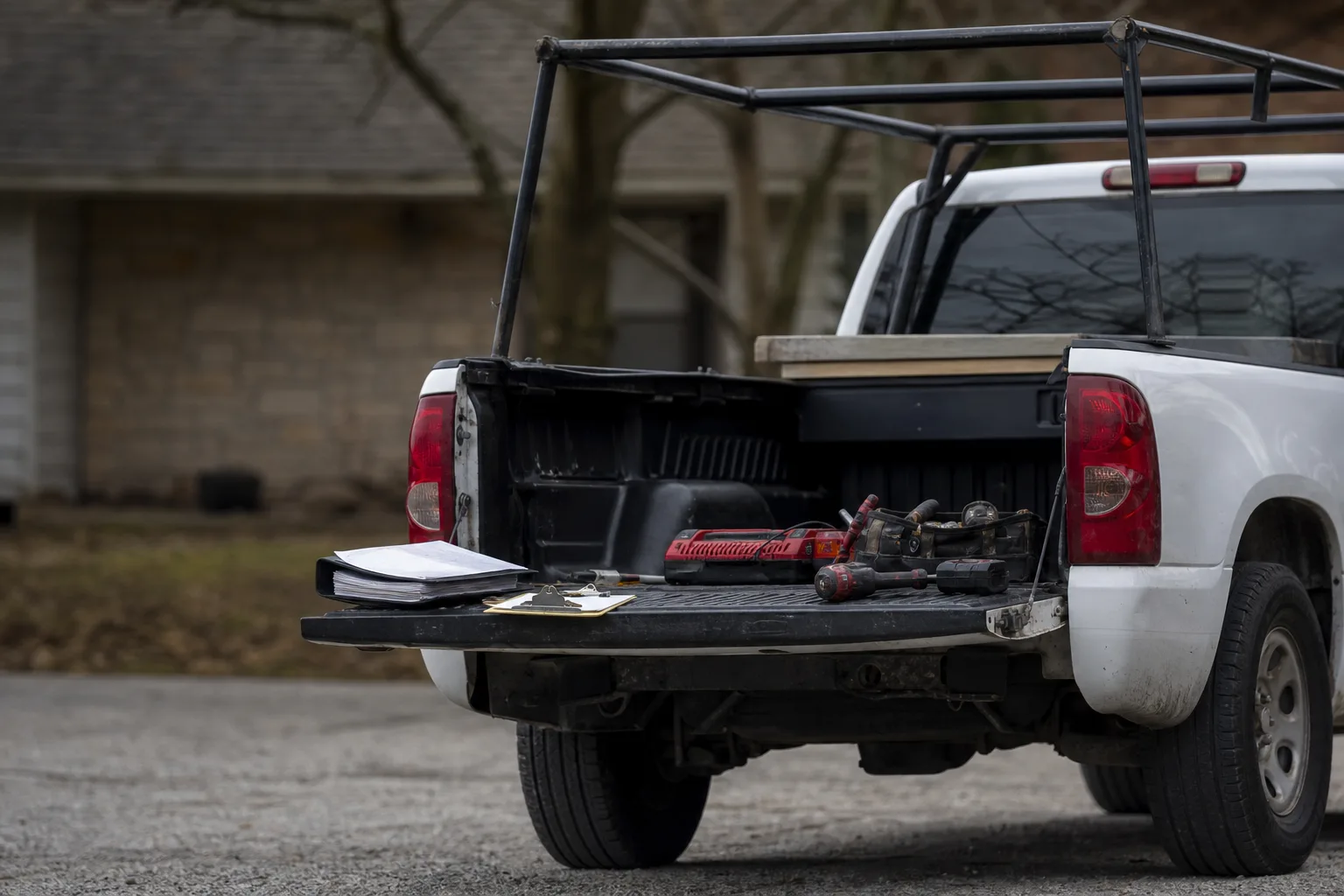
The number most people run before they leave a payroll job is the hourly one, and it is the least useful number available. An employer's hourly rate is the visible tip of a package that also carries half of the Social Security and Medicare contribution, a workers compensation premium, general liability coverage, a vehicle, fuel cards, a phone line, and whatever the health plan costs before the deduction shows up on the pay stub. Going self-employed does not delete those costs. It moves them onto your side of the ledger, where they arrive on different dates and in different sizes, and where nobody withholds anything on your behalf.
Three routes out, and they do not cost the same to open
The first route is subcontracting to one general contractor or one builder who already has a pipeline. You bring hands, tools, and a certificate of insurance, and you bring almost no marketing cost, because the work is handed to you. The second route is building your own customer base, residential or light commercial, which means a phone number that gets answered, a truck that looks like it belongs in a driveway, and a slow accumulation of people who will vouch for you. The third is keeping the W-2 job and taking side work legally in evenings and on Saturdays, which caps your exposure while you find out whether the demand is real.
Opening costs run in that same order, cheapest first. Subbing to a single GC can start with a business registration, a general liability policy, and a tax identification number, because the equipment is often already in your possession from years of buying your own hand tools. Own-customer work adds lettering or a wrap, a listing presence, a way to take card payments, and estimating software or the patience to do it in a spreadsheet. Weekend work adds the least of all, and that is the point of it: you learn what a job actually takes you, in hours, before the mortgage depends on the answer.
The equipment you own is rarely the equipment the work needs
Most people leaving a crew own their hand tools, a decent drill and impact driver, and a cordless platform they have been feeding for years. What they do not own is the second of everything. On a payroll crew the company owns the miter saw, the table saw, the generator, the ladders past twenty-eight feet, the pipe threader, the camera, the recovery machine, the manifold set, the big rotary hammer, and the trailer that carries them. Those are the line items that surprise people, and they are also the ones where a used purchase is genuinely fine, because a steel saw stand does not care who owned it first.
Battery platforms are where the substitution question gets expensive. Committing to one manufacturer keeps your packs interchangeable and your charger count low, but it also means that when the tool you need exists only on a rival platform, you are buying a battery, a charger, and the tool together. What wears out first is almost never the tool body. It is batteries, blades, bits, hoses, and cords, and that consumable line is a monthly cost rather than a startup cost. Budget for it as a percentage of revenue and it stops being a shock.
The monthly floor, which exists whether the phone rings or not
Insurance is the largest recurring item for most one-person trade businesses, and it is priced almost entirely off two things: your trade classification and your payroll. Roofing, framing, and anything with regular work at height sit at the expensive end. Low-voltage, tile, and finish carpentry sit lower. If you have no employees you may be exempt from carrying workers compensation in your state, but general contractors routinely require a policy or a formal exemption filing anyway, because their own audit depends on it. A commercial auto policy is separate from the personal one on your truck, and a claim on personal coverage during paid work is the kind of denial that ends a business.
Then there is licensing, which varies more by state than any other cost. Some states license by trade at the state level with an exam, a bond, and proof of experience hours. Others push it to the county or the city, where the fee is small and the renewal is annual and easy to miss. A surety bond is not insurance, and the distinction matters: it protects the customer, and if it pays out, you repay the surety. Add health coverage, which on the individual marketplace is priced by age and geography, and self-employment tax, which is the employer half you used to never see.
What changed recently, and why it moved the math
The classification question got noisier. The Department of Labor is responsible for how independent contractor status is determined under federal wage and hour law, and the standard it applies has been rewritten, challenged, and revisited within the last few years, while several states run their own stricter tests alongside it. The practical effect on a one-person trade business is not abstract. General contractors have become considerably more careful about paperwork before they let anyone on site, which means a current certificate of insurance, a signed subcontract, a W-9 on file, and often a workers compensation exemption certificate, gathered before the first day rather than after the first invoice.
Insurance pricing moved too, for reasons that have nothing to do with you personally. Commercial auto rates have climbed across the board on the back of repair costs and claim severity, and a wrapped work truck with a ladder rack is priced as a commercial vehicle regardless of how carefully you drive. Payment processing changed as well: the reporting threshold for third-party payment platforms has been revised more than once, which means the card and app payments you take are far more likely to arrive on a form the IRS also receives. None of that is a reason to stay on payroll. It is a reason to set up the records in the first month instead of the eleventh.
How availability prices you, and what an instant yes signals
Here is the part that decides your first year more than any equipment purchase. When you start, you are available, and availability is visible to customers. A homeowner calling five people and getting four voicemails and one cheerful offer to start Monday will read that last one two ways, either as luck or as a warning, and the ones who have been burned before read it as a warning. The answer is not to pretend to be busy. It is to have the things a booked tradesperson has: a written estimate that itemizes materials and labor separately, a certificate of insurance you can email within the hour, references from the crew you left, and a deposit structure that does not ask for most of the money up front.
That is also where the three routes diverge in earnings rather than costs. Subbing to one GC gives you a steady calendar and a rate set by someone else, and it exposes you to a single point of failure if that builder slows down. Own-customer work carries the marketing cost and the unpaid hours of estimating, and it pays materially better per hour once the referral engine turns over, usually somewhere in the second year. Weekend work pays the least in total but costs almost nothing to test, and it is the only one of the three that lets you keep the employer health plan while you find out.
The sequence that works for most people is to price the floor first, in writing, before quitting anything: insurance quotes for your actual trade class, the license and bond requirement for your actual county, a realistic consumables number, and the health coverage figure for your household. Then set the hourly rate that covers all of it plus unbillable time, and compare that to what the first route can realistically hand you in week one. The businesses that survive are rarely the ones with the best tools. They are the ones that knew their monthly number before the first invoice went out.