Hiring Out the Cleaning? Five Things to Check Before You Agree a Price
Dated4 min read
A household guide to judging cleaning and upkeep contractors by the machine that arrives, the consumables in the price, the insurance certificate, and what a same-week yes really means.
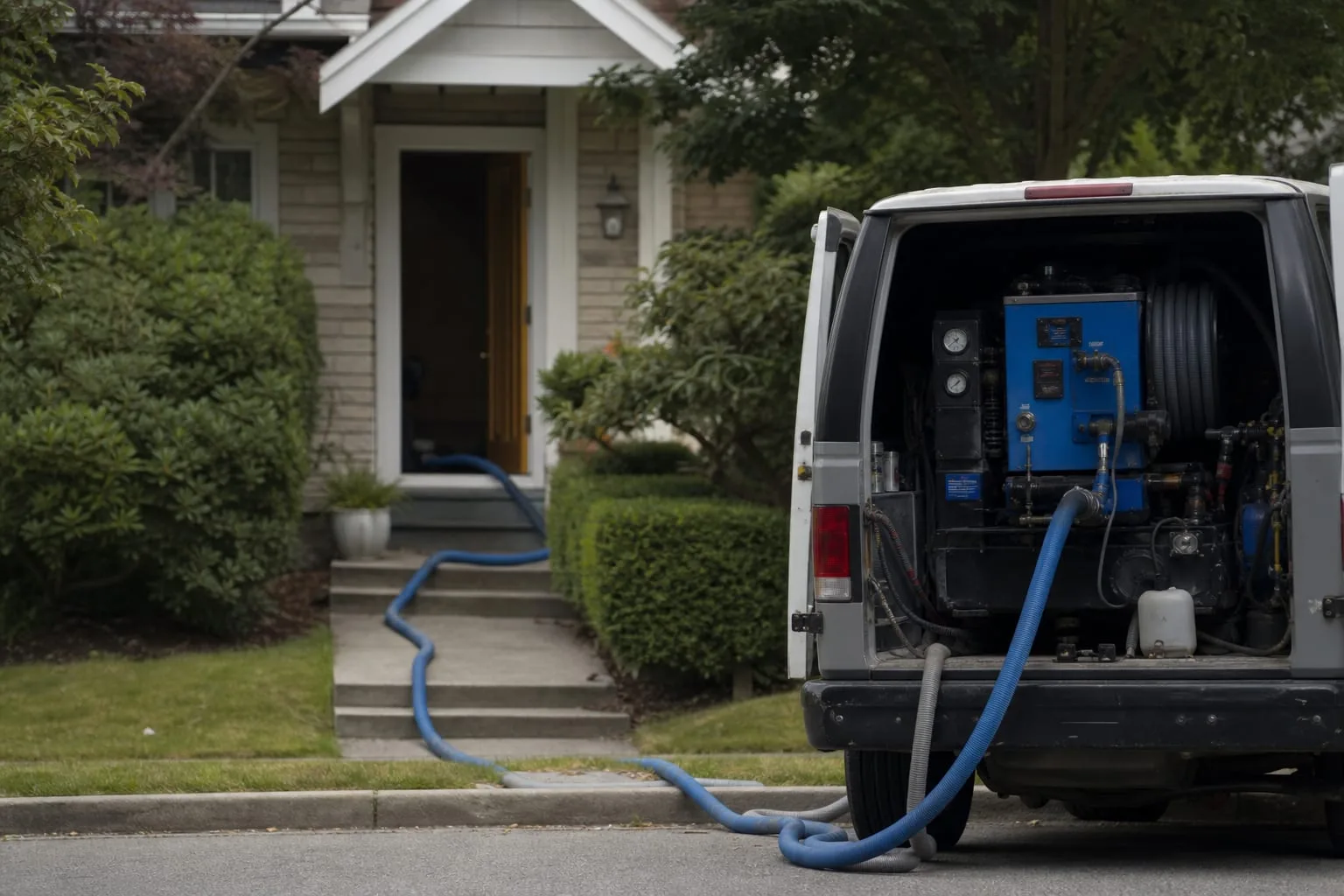
The jobs worth paying out are the ones where the equipment costs more than a weekend rental, the height is more than a step stool, or the mistake is permanent. Carpet that stays wet for two days smells for a year. A roof scrubbed with the wrong dilution loses granules. Most households arrive at that conclusion after doing the job badly once, which is an expensive way to learn, and the alternative is learning to read a contractor before the truck is loaded. The checks below are about the physical stuff: what shows up, what it is made of, and who pays when it goes wrong.
One: ask what machine is coming, and whether it lives on the truck
For carpet and upholstery, the single most useful question is whether the extractor is truck-mounted or a portable unit carried in through the door. A truck-mount runs off the vehicle engine, holds heat, and pulls a vacuum a portable cannot match, which is the difference between carpet dry in hours and carpet damp overnight. Portables have their place, high-rise work above the hose run, small apartments, but a company that owns only portables and charges truck-mount rates is selling you the label. The same logic applies to floors: a rotary buffer with fresh screens is a different job from a mop.
Two: find out what the price includes once the consumables are counted
Every cleaning trade has a part that wears out, and the honest quotes account for it. Buffing screens dull. Deionizing resin in a water-fed window pole exhausts and has to be recharged, which is why some window cleaners quote higher in hard-water areas and are right to. Pads, filters, drop cloths, corner guards, disposal of what came out of the gutters: any of these can appear as a line item afterward if nobody said otherwise. Ask directly whether the number covers materials and haul-away, then ask what happens if the job takes a second application. The answer tells you whether the estimate was built or guessed.
Three: read the chemistry, at least far enough to ask one question
You do not need to be a chemist to ask what solution is going on the surface and how long it sits there. Roof and siding work splits cleanly between pressure, which strips, and soft washing, which relies on a dilute sodium hypochlorite blend and dwell time to do the work at low pressure. On asphalt shingles the pressure route removes the granules that make the shingle a shingle. Indoors, cleaning and disinfecting are two separate steps, and disinfectant labels carry contact times that get ignored when a crew is behind schedule. The Environmental Protection Agency registers those products and their label claims. A contractor who talks about dwell time unprompted has read the label.
Four: get the insurance certificate before the ladder comes off the rack
The upkeep jobs households hire out most often, gutters, windows above the first floor, chimney sweeping, roof washing, are height jobs, and height is where the money stops being about cleanliness. Ask for a certificate of insurance sent directly from the agent, not a photo of a card, and look for general liability and workers compensation both. If a solo operator carries no workers compensation because he has no employees, that is legal in many states and worth knowing before he brings a helper. The Occupational Safety and Health Administration is responsible for fall protection standards on job sites, and the crews that follow them tend to be the crews that are insured. Your homeowners policy is not a substitute.
Five: notice how the price was reached, and how fast the yes came
A price arrived at by phone in ninety seconds, sight unseen, is a placeholder that will be revised on the day or a number padded enough to absorb whatever they find. A price arrived at after someone counted rooms, measured square footage, looked at the gutter run from the ground, or asked when the carpet was last cleaned and with what, is a price that can hold. Ask which one you are getting. Good operators will say plainly that they need to see it, and will tell you the two or three conditions that would move the number, pet contamination, a second story, a chimney that has not been swept in a decade.
Then there is availability, which is the check people misread most. In a trade with real demand, the competent operators are booked out, and a same-day yes in the middle of gutter season usually means someone had a cancellation, someone is new, or someone is quietly subcontracting your job to a crew you never spoke to. None of those is automatically bad. A new operator with good equipment and a certificate of insurance can be excellent value while the reputation catches up. But an instant yes is information, so ask what opened up, and listen for whether the answer is specific.
Building the judgment so the next hire takes ten minutes
These checks compound. Once you have asked one carpet company about truck-mount versus portable, you can hear in thirty seconds whether the next one knows what you are asking. Once you have seen a real certificate of insurance, the photo of a card stops being persuasive. Keep a single note on your phone with the name, the equipment, the price, the date, and what the crew actually did on the day, because that record is what turns a second hire into a phone call rather than a search. Households that hire the same three trades every year are, after two or three cycles, buying on evidence.
The jobs worth paying for are the ones where the gap between a good outcome and a bad one is wide and hard to undo, and those are exactly the jobs where a five-minute conversation about equipment, consumables, chemistry, insurance, and how the number was reached earns more than any amount of comparison shopping on price alone. Ask before the truck is loaded, not after.