Re:Money
Insuring a Ring for the First Time? The People Who Handle It Before Your Carrier Does
Dated5 min read
An appraisal is a dated snapshot of replacement cost, and four separate trades touch the piece before an underwriter ever sees a number.
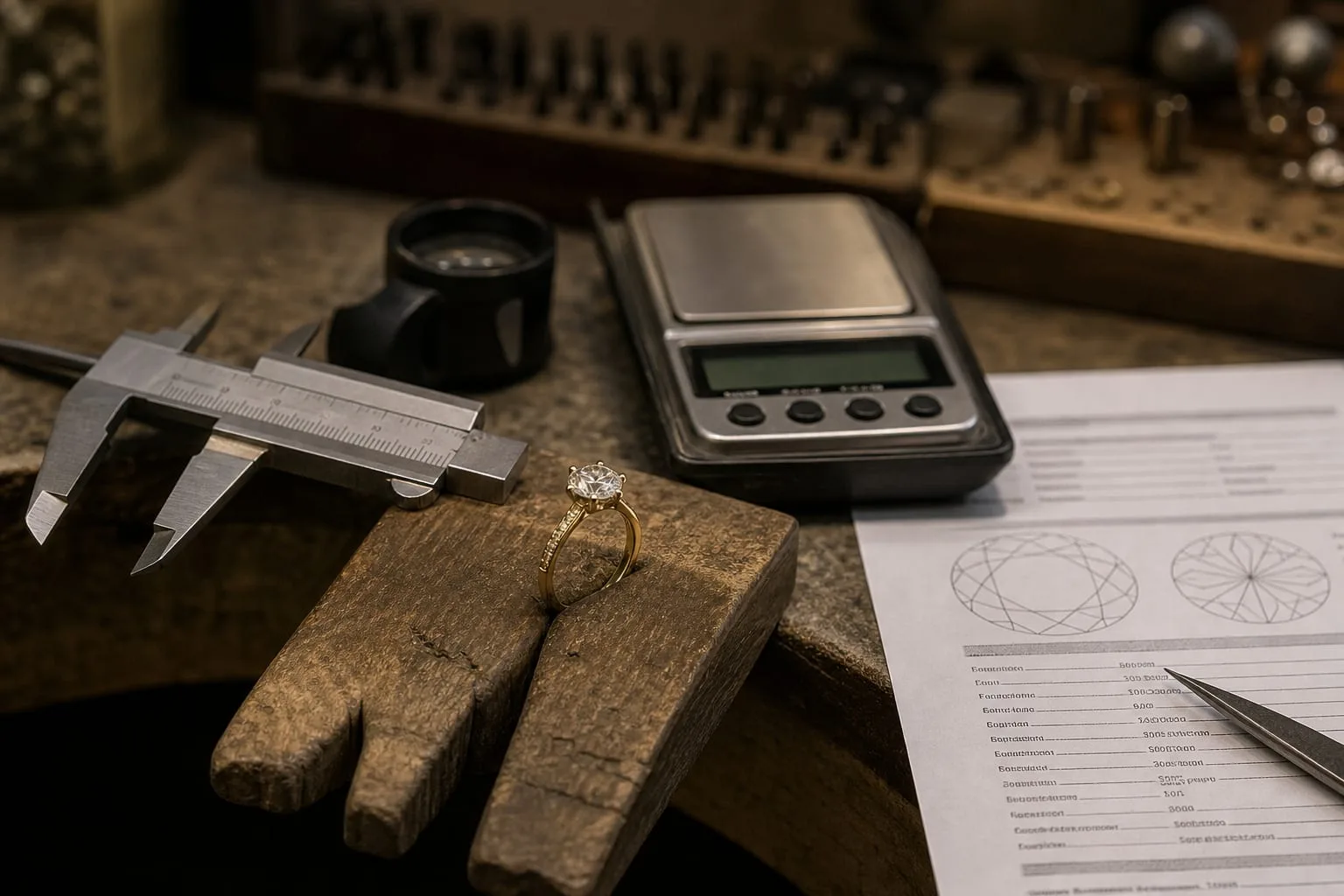
The document you are about to pay for is not a certificate of worth. It is a dated estimate of what one particular retailer, in one particular market, would charge to put a comparable piece back on your hand. That distinction decides almost everything that follows: how often you refresh it, what your carrier will pay, and whether the check at the end of a claim covers the replacement or falls short by a third. Most people meet the distinction after a loss. It is cheaper to meet it now, at the counter, with the ring still on.
Four sets of hands before the policy exists
The first is the bench jeweler, who cleans the piece, checks the prongs under magnification, and tells you whether a stone is loose before anyone weighs anything. That cleaning is not cosmetic. Old skin oil, hand lotion and polishing compound sit under a setting and change how a stone grades for color and clarity, so a dirty ring appraises low. The bench also generates the first waste of the job: spent ultrasonic solution, a steam line, and, if a prong gets retipped, a few milligrams of gold dust that goes into the sweeps bin and not into the trash can.
The second is the gemologist, who may or may not be the same person. This is who identifies the stone, measures it, plots inclusions, and decides whether the center is natural, treated, or laboratory grown. That single determination moves replacement cost more than any other variable on the page, and it is the one a first-time client is least equipped to check. The Federal Trade Commission oversees how jewelry materials are described to consumers, and the descriptive language on a competent appraisal follows those conventions closely, which is why the wording can look stiff and repetitive.
The third is your insurance agent, who does not read the appraisal so much as extract three fields from it: description, value, and date. The fourth, whom you will never speak to, is the underwriter who decides whether the piece gets scheduled at all, at what deductible, and whether the carrier wants a fresh document because yours is older than their internal threshold. None of these four owes you an explanation of the others' work. Ask the appraiser directly what your carrier will want, because appraisers deal with insurers weekly and agents rarely open the report.
Why the number goes stale, and what that actually means
Nothing on an appraisal expires in a legal sense. What expires is the market snapshot behind it. The value line is built from what comparable goods were selling for on the date of inspection, and it moves with metal prices, cutting costs, exchange rates, and the retail structure of whoever would be asked to replace the piece. Insurers manage this by setting an update interval, commonly a few years, sometimes longer for plain metal and shorter for significant colored stones. If you do not update, you do not lose coverage. You lose the argument about what the coverage is worth.
The direction of that drift is not always upward, which surprises people. Laboratory-grown diamonds have reshaped the replacement cost of certain center stones dramatically over the last several years, and an appraisal written before that shift may describe a replacement path that no longer reflects what a retailer would charge. Colored stone markets move on their own schedule, driven by mine closures and by treatment disclosure standards tightening. An old document does not become fraudulent. It becomes a description of a store that no longer prices things that way, and a claim run against it produces a number nobody recognizes.
What to hand over, and what should come back
Bring the piece, any original sales receipt, and any grading report from an independent laboratory. The receipt matters more than first-timers expect, because it establishes what was actually paid, and the lab report matters because it lets the appraiser skip guesswork on the center stone. Leave the piece for the appointment if asked. Good measurement requires the stone out of the mounting in some cases, and a competent appraiser will tell you plainly when removal is warranted, what the bench charge is to reset it, and what happens to the small amount of metal lost in the process.
What comes back should include full measurements in millimeters, total weight, metal karat and its basis, a plotted diagram or clear photographs of the actual piece rather than stock imagery, a stated purpose (insurance replacement, not fair market value or liquidation), the appraiser's credentials, and a date. If any of those are missing, the report will still be accepted by most carriers and will still fail you at claim time, because the adjuster cannot source a replacement from a description that says only "one ladies' diamond ring, 14k." Specificity is the entire product you are buying.
Expect to pay by the hour or by the item, never as a percentage of the value. A percentage fee gives the appraiser a direct interest in a high number, which is the arrangement every professional body warns against and which some carriers will reject outright. Ask the fee basis on the phone before you book.
Scheduling, deductibles, and what the claim asks of you
Most homeowners policies carry a low internal cap on jewelry loss by theft, often a few thousand dollars regardless of your overall limit, and that cap is why scheduling exists. A scheduled item is listed individually, usually with no deductible, and typically covers mysterious disappearance, meaning the stone that is simply gone from the setting one evening with no story attached. Unscheduled jewelry generally does not cover that. This is the single largest gap between what first-time clients assume they bought and what the declarations page says.
Understand which basis applies. Replacement cost means the carrier may fulfill the claim by supplying a comparable piece through their own vendor network rather than writing you the appraised sum, and that vendor buys at wholesale, so the check you imagined may never appear. Agreed value, available from specialist carriers, fixes the payout in advance. Neither is wrong. They price differently and they behave very differently on the day, so ask the agent which one your policy uses and get the answer in writing.
A damage claim ends in a place nobody mentions at the counter. If the piece is repaired, the ruined mounting comes off the bench as scrap and goes to a refiner, because gold, platinum and the plating chemistry around them cannot be disposed of as ordinary trash. If the piece is replaced outright, the carrier usually takes possession of the damaged original as salvage, and it is refined too. You may be able to buy back a sentimental setting before that happens, but only if you ask before the adjuster closes the file.
Set a calendar reminder for three years from the appraisal date and another for the day your policy renews, and keep the report, the receipt, the lab document and current photographs in one place that is not the same building as the jewelry. When the update comes due, return to the same appraiser if you can. They already have the plot, the measurements and the file, and refreshing a known piece costs a fraction of establishing one from scratch.