Re:Money
One Claim Filed, One Paid Out of Pocket. What the Renewal Notice Showed a Year Later
Dated4 min read
A household with two water losses in eighteen months filed one and absorbed the other, and the renewal notice explained why the second decision mattered more than the first.
The hose behind the washing machine let go on a Thursday afternoon, upstairs, in a house where the laundry sits above the dining room. By the time anyone noticed, the ceiling below had a stain the shape of a state nobody could name, and the drywall had gone soft enough to press a thumb into. The household called the carrier that night, got a claim number from a call center in another time zone, and had an adjuster from a vendor network on site inside four days. That part worked. What happened eighteen months later, at renewal, is the part worth tracing.
What the first loss cost, and what it recorded
The physical job was six weeks of inconvenience: plastic sheeting taped across the dining room doorway, two dehumidifiers running loud enough that phone calls moved to the porch, no laundry in the house, and a subfloor left open long enough that the dog learned a new route. The paid amount landed above the deductible by a comfortable margin, enough that filing was clearly the right call. But the check was only half of what the transaction produced. The other half was a record: a dated water loss, a cause code, a paid figure, and a property address, all written into the carrier's file and reported outward to an industry loss history database.
Large carriers are built so that the person who takes your call has nothing to do with the person who prices your renewal. Claims handling sits in one organization, underwriting in another, and the loss history report is the bridge between them. The Federal Trade Commission oversees consumer reporting under the federal fair credit reporting framework, and property loss reports fall inside that world, which means a homeowner has the right to request their own file and dispute what is wrong in it. Almost nobody does. The household in this case did not know the file existed until an agent read from it.
The second incident, and the decision that actually mattered
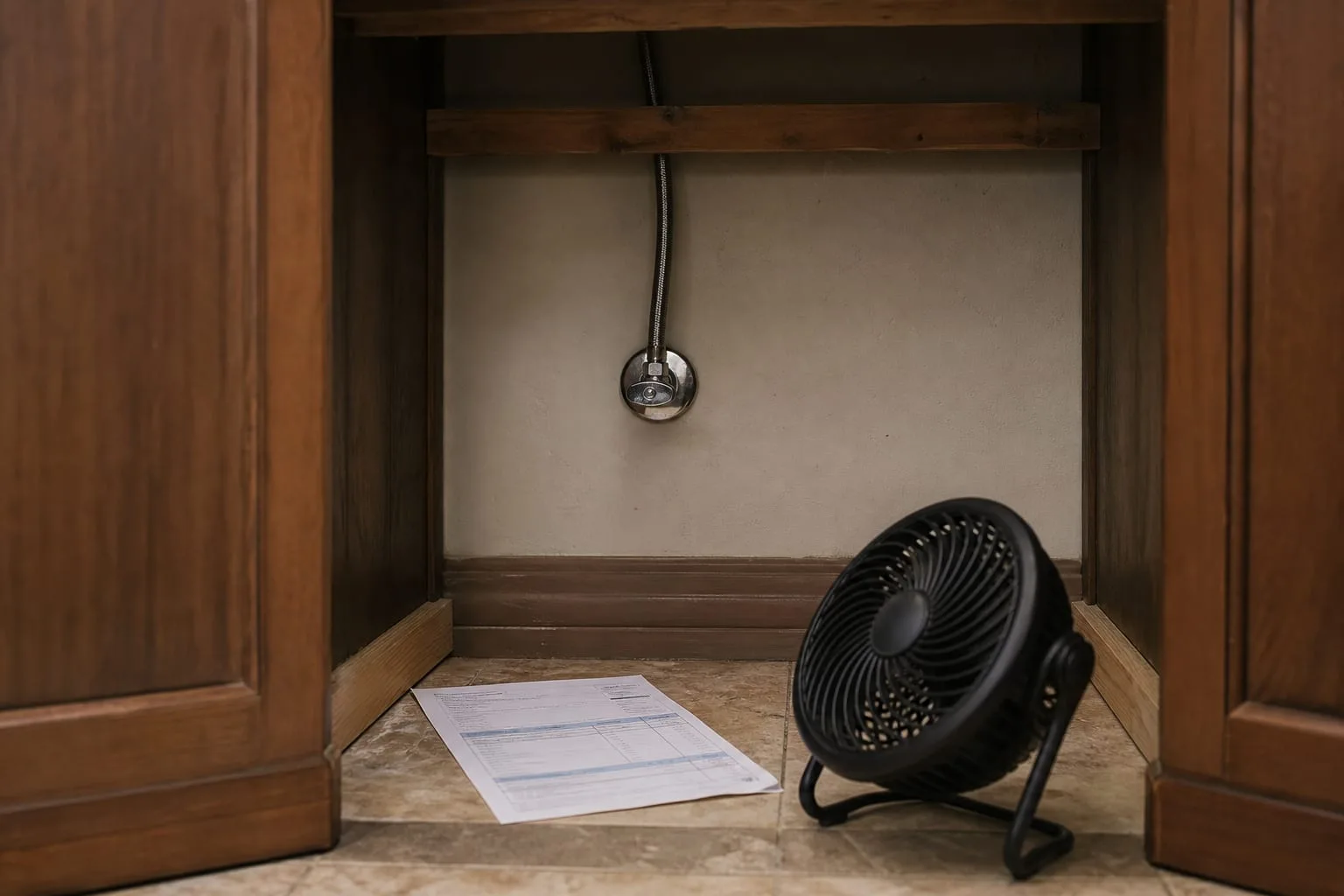
Fourteen months on, a supply line under the kitchen sink began weeping at the compression fitting. It was caught early, because the cabinet floor had been replaced once already and somebody was in the habit of checking. Damage was confined to the cabinet base, a strip of flooring at the toe kick, and the lower few inches of drywall behind the disposal. A plumber replaced the line and the shutoff the same afternoon. A drying fan ran for three days. The repair estimate came in at roughly the size of the deductible, give or take a few hundred dollars, which is the range where filing buys almost nothing and records everything.
They called the agent to ask, which is where the second lesson sits. At a large provider, a call to an agent about a possible claim can be logged as an inquiry, and inquiries sometimes appear in the file even when no claim is opened and no money changes hands. The way to ask without creating a record is to ask in the abstract: how does the company treat a second water loss inside two years, what is the threshold at which frequency starts to matter, what does the underwriting guideline say about non-weather water. No address, no date, no description of the cabinet. The agent answered the general question, and the answer was blunt enough to decide the matter.
Why frequency, not amount, drives the renewal
Underwriters at a national carrier are not reading your story. They are reading a count. Two water losses in a rolling period, regardless of how small the second one was, moves a policy from an ordinary file into a category that gets looked at by a person, and a file that gets looked at by a person can come back with a higher rate, a higher water deductible, a water sublimit, or a non-renewal notice. One loss, cleanly documented and clearly a one-time failure, mostly does not. That asymmetry is why the second decision carries more weight than the first, and why the useful question is never whether a claim will be paid but what it will do to the count.
The everyday consequences of getting that wrong rarely arrive labeled. A non-renewal does not read as a disaster; it reads as a letter with a date on it. But the letter sends you shopping with two losses in your file, which narrows the market to carriers that price for exactly that, and the new premium flows into the mortgage escrow account, which recalculates and raises the monthly payment. People trace the higher payment to their taxes or to the housing market. It came from a cabinet floor and a compression fitting.
What the household did instead, and how it held up
They paid the second repair themselves and treated the documentation as if a claim had been filed anyway. Photographs before the plumber arrived, the invoice showing the line and the shutoff replaced rather than patched, the receipt for the fan rental, and a one-page note with the date the leak was found and the date the cabinet went back together. That folder is not for the carrier. It is for the next underwriter, or the next buyer's inspector, who will want to know that a wet cabinet was addressed at the source and not painted over.
They also asked for their own loss history report and read it against their memory. The first claim was there, with the right date and a cause code that matched a plumbing failure rather than long-term seepage, which is the distinction that decides whether a future claim gets treated as a repeat of an unresolved problem. Nothing needed disputing. At renewal the premium moved the way premiums have been moving generally, with no water deductible endorsement and no letter. One loss on the record, one repair on a receipt, and a house with two new shutoffs that somebody checks.
The washing machine hose is now braided steel, replaced on a schedule written on a piece of tape inside the laundry closet door. That is the part of this that cost the least and prevented the most.