Re:Legal
One Speeding Ticket, Three Flat Fees. What Each Number Is Actually Quoted Against
Dated6 min read
Three firms quote a flat fee on the same citation and the numbers are far apart. The gap is almost always scope, not skill, and it is visible if you ask the right four questions.
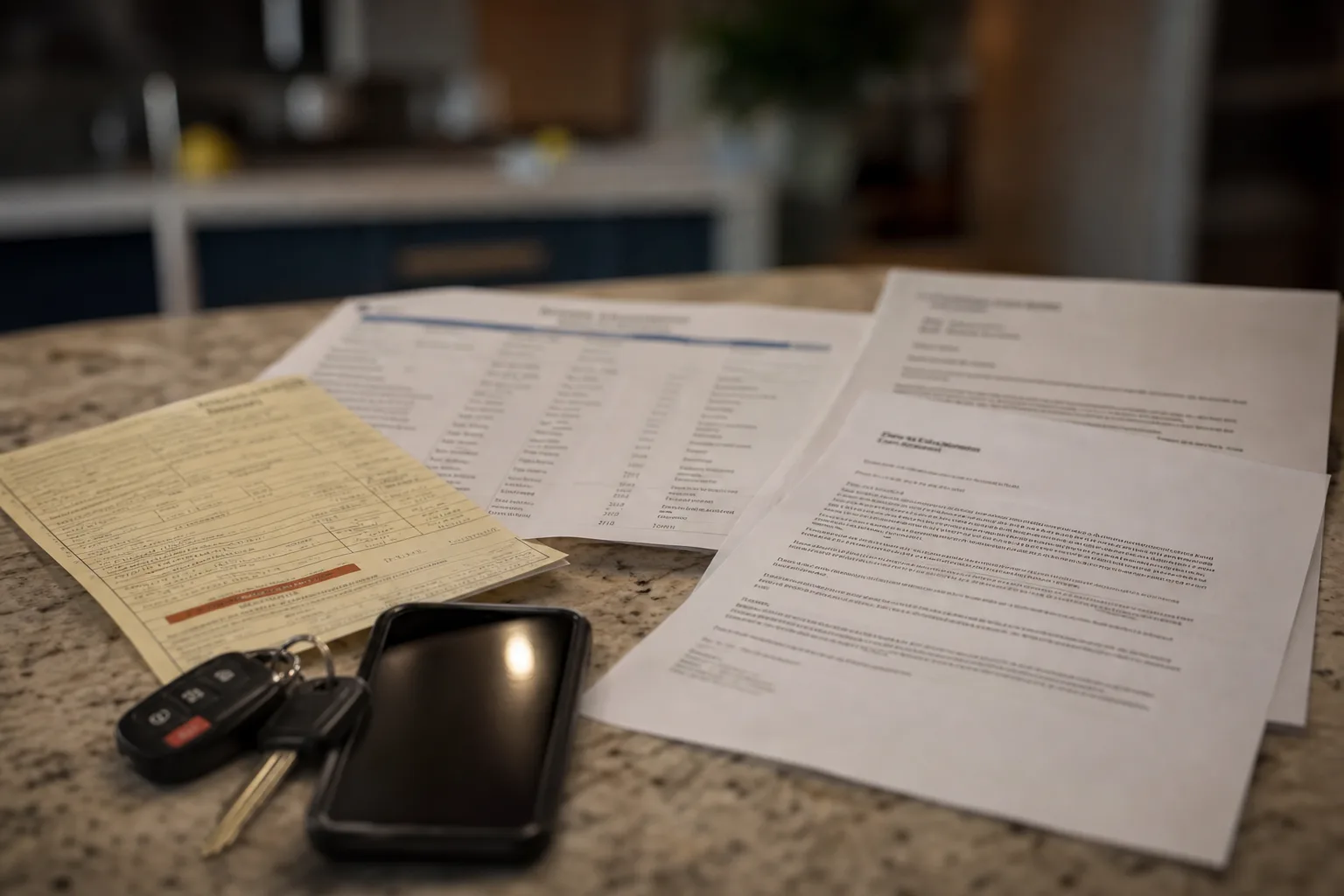
A citation for nineteen over on an interstate, issued to a driver with one prior violation six years old and an auto policy renewing in March, is about as plain a legal matter as a household encounters. It is also the matter where quoted fees diverge most wildly, with three firms in the same county naming numbers that can sit several hundred dollars apart for work that sounds identical on the phone. The spread is rarely about talent. It is about what each number is measured against: one appearance, one disposition, or the whole file until it closes.
The first question is whether the fee buys an appearance or a result
A flat fee quoted against a single court appearance is a real product and a legitimate one, and it is what most of the lower numbers are. The attorney enters a notice of appearance, shows up at the contested hearing date, talks to the prosecutor, and either lands a reduction or does not. If the case is continued, reset, or sent to a trial calendar, that is a second event, and a second event under an appearance-based fee generates a second invoice. Nobody is hiding this. It simply lives in the engagement letter rather than the phone call.
A fee quoted against a disposition is a different shape. It covers the case from retention until the court enters a final order, however many settings that takes, which means the attorney absorbs the risk of a crowded docket, a prosecutor who wants discovery, or an officer who fails to appear and forces a reset rather than a dismissal. You pay more at the front for a ceiling at the back. On a straightforward citation with a clean record, the two approaches often land within a hundred dollars of each other by the time the file closes.
What separates a good quote from a barely adequate one is that the good one states which of these it is without being asked twice. The adequate one says a number, and when you ask what happens if the case gets continued, the answer arrives slowly and in general terms. That hesitation is information. Firms that do volume traffic work have answered the continuance question several thousand times and can tell you, immediately, what their own reset rate looks like in that particular courthouse.
The costs that sit outside every flat fee, and why that is normal
Court costs are not legal fees and no competent firm folds them in, because the court sets them and they change. On a reduced charge, the fine attached to the lesser offense is yours. If the resolution runs through a deferral program, the court's administrative fee for that program is yours. Defensive driving or a traffic safety course, where the jurisdiction allows one as part of the deal, is yours, and the provider bills separately. A records search to pull your certified driving abstract may be a small pass-through or may be absorbed, and the two firms will tell you which.
The item people miss is the second matter. A speeding citation and an administrative action against the license are separate proceedings with separate deadlines, and a fee quoted for the traffic case does not cover a hearing before the state licensing agency unless the letter says so. On a nineteen-over with one old prior, that hearing may never materialize. On a driver who has accumulated enough in a short window to trigger a suspension review, it is the more consequential of the two, and it needs its own quote.
Commercial drivers should treat this as the whole conversation rather than a footnote. The Federal Motor Carrier Safety Administration is responsible for the rules governing commercial licensing and how convictions are reported and recorded, and the practical effect is that the usual local workarounds that keep a violation off a private driver's record are not available in the same form. A firm that handles commercial files will raise this in the first three minutes. One that does not raise it has probably not handled many.
What the fee does not need to include, and what it should
Nobody should be paying for a jury trial they will never have, and a quote that bundles trial preparation into a routine citation is padding. What the fee should include is the unglamorous middle: the discovery request, review of the radar or lidar certification and calibration log, the officer's training records where they are obtainable, and the decision about whether any of it is worth raising. That review is where reductions come from. It takes an hour, sometimes less, and a firm that skips it is selling you an appearance and a handshake.
Ask what the firm does when discovery turns up nothing useful, because that is the common outcome and the honest answer is interesting. The useful reply describes a negotiation: what this prosecutor typically offers on this charge with this driving history, and what the firm asks for first. The weaker reply restates the fee. When you call around, the better speeding ticket lawyers will talk about the courthouse and the calendar before they talk about the price, because the courthouse is what determines the price.
Be careful with an instant yes. A firm that promises dismissal on a first call, before pulling your abstract and before knowing which court the citation lands in, is quoting against a hope. The same energy from a contractor who has not seen the crawlspace means the same thing. What you want instead is a conditional answer with the conditions named: if the officer appears and the calibration is current, here is the likely range; if there is a reset, here is what that does to the timeline and the cost.
Making three quotes comparable on one page
Put the numbers side by side and write four things under each. First, what triggers an additional fee, stated as an event rather than a feeling. Second, whether an appeal, should the hearing go badly, is inside or outside. Third, whether the firm appears for you so that you do not take a day off work, which on a weekday morning docket is worth real money and should be stated plainly. Fourth, who handles the licensing side if it opens. Four lines each, three firms, and the spread usually resolves itself.
The engagement letter is where this gets settled, not the intake call, and reading it carefully is the cheapest hour in the process. Look for the word that governs scope: through hearing, through disposition, through appeal. Look for a refund provision, because some firms return a portion if the citation is dismissed before the first setting and others do not, and both practices are defensible so long as you know which you bought. Look for how costs advanced are billed and when.
Timing shapes availability more than most people expect. The firms with the best read on a given courthouse are often booked into the following month, and a citation carries a response deadline that does not move for anyone's calendar. The workaround is to call early, ask whether they can file the response or request a contested setting now and take the substantive work later, and accept a brief paid consultation with a busy firm over immediate full representation from one with an empty week. Availability on short notice is not a defect. Availability combined with a guarantee is.
The insurance arithmetic that decides whether any of this is worth it
The reason to spend several hundred dollars contesting a fine of less than that is the surcharge, and the surcharge is the number you should bring to the call. Your carrier can tell you what a moving violation does to the renewal, and how long it stays in the rating period. A reduction to a non-moving offense, a deferral that keeps the conviction off the abstract, or an outright dismissal are three different outcomes with three different effects on that renewal, and a good attorney will ask which one you actually need before quoting.
That conversation also tells you when to walk away. If the violation is minor, the record is otherwise clean, and the carrier confirms the renewal barely moves, paying the fine is the rational choice and a firm worth hiring will say so out loud. The willingness to turn down a small file is the clearest signal that the fee on a larger one is quoted against real work. It is the same tell as a roofer who says the flashing will hold another two winters.
Keep the paperwork in one place: the citation, the abstract, the engagement letter, the receipt for any deferral fee, and the final order. Six months later, when the renewal arrives and the surcharge is not on it, that folder is what proves the sequence worked.