Re:Corporate
Outsourcing Your Stock? Five Checks That Decide What a Third Party Warehouse Actually Costs
Dated4 min read
The pallet rate is the smallest number in a fulfillment contract. Five checks that show what receiving, packaging, returns disposition and exit terms really cost.
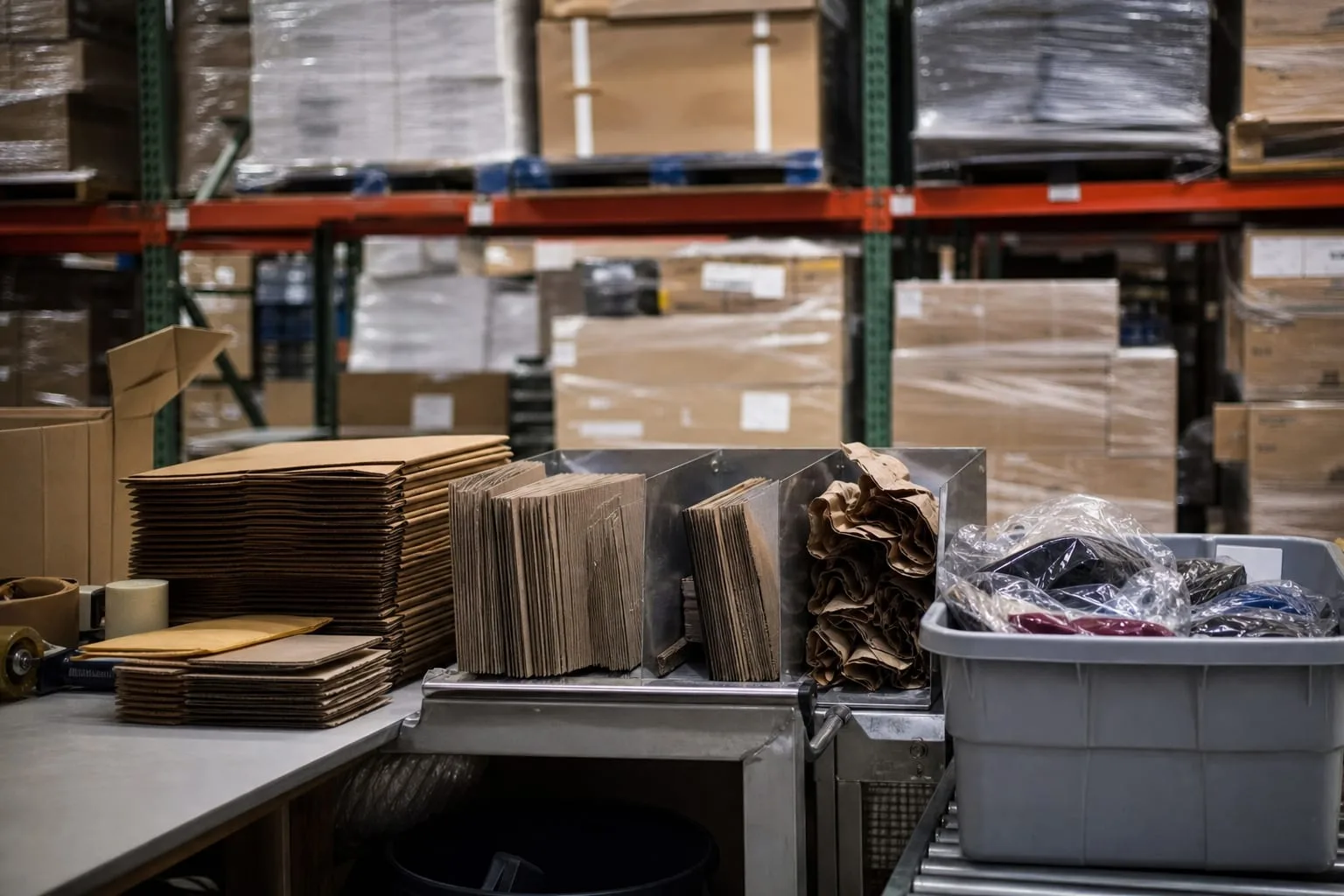
Most people shopping for a fulfillment partner compare the pallet rate, find a spread of a few dollars a month between three quotes, and pick the cheapest. The pallet rate is the least interesting number in the agreement. What actually moves the annual invoice is everything that happens at the two ends of the building: what it costs to bring goods in, and what it costs to get rid of the boxes, the void fill, the damaged units and eventually the account itself. Follow the waste and the real price shows up.
One. The storage line is small, the handling line is not
The common assumption is that a third party logistics provider sells space, and that a bigger building means a better price per square foot. What they sell is labor with a roof on it. Receiving is billed by the hour or by the carton, and a container that arrives floor loaded rather than palletized can cost more to unload than a month of storage costs to hold. Ask for the receiving schedule before the storage schedule. Ask what happens when a shipment arrives with mixed SKUs in one carton, because that is where the per unit sortation fee lives, and it is rarely quoted up front.
Two. Somebody has to pay for the box, and that changed
Packaging is treated as a rounding error in most quotes: a corrugated mailer, a bag, some paper fill. Two things have shifted. Carriers price by dimensional weight, so an oversized box is charged as though it were heavy, which means the cheap carton is the expensive one. And several states have passed extended producer responsibility laws for packaging, phasing in over the next few years, under which the brand that puts the material into commerce reports it and pays a fee scaled to how recoverable it is. Your 3PL picks the box. You carry the obligation. Get the packaging specification written into the agreement, with material types named, so the reporting data exists when someone asks for it.
Three. Returns do not go back on the shelf by default
The assumption that costs the most money is that a returned unit becomes sellable inventory again after a quick inspection. Some do. A meaningful share are graded down, liquidated by the pallet, or disposed of, and each of those outcomes carries a fee per unit that appears on the invoice under a heading like disposition or reverse handling. What changed recently is volume and geography: retailers and marketplaces consolidated returns into regional hubs and, for low value goods, started issuing refunds without asking for the item back, which pushed the physical handling problem into fewer, larger buildings. Ask your provider for its disposition table in writing, with the fee attached to each outcome, and ask who decides which outcome a given unit gets.
Four. The things that cannot go in the dumpster, or the parcel
Every catalog has a few items that turn into a compliance question the first time one leaks. Lithium batteries, aerosols, nail polish and remover, hand sanitizer, lighter refills, certain cleaners and adhesives: these ship under limited quantity or excepted quantity rules, they have marking and packaging requirements, and when one is crushed on a conveyor it becomes a waste stream that cannot legally go into the compactor out back. The Environmental Protection Agency oversees how discarded batteries and similar items are managed under the universal waste rules, and a warehouse that handles them well already knows this and has a collection program. Ask directly. A provider that answers with a named process and a hauler is telling you something useful about the rest of the building.
Five. What it costs to leave, and how long notice really is
The exit clause is the one nobody reads at signing and everybody reads at two in the morning eighteen months later. Assume you can move your inventory when you want to and you will find a notice period, a per pallet removal charge, a palletizing and wrapping fee for goods currently sitting in bins, and sometimes an outstanding balance clause that lets the provider hold the stock until the account clears. The other recent change worth pricing is long dwell surcharge. After the inventory glut of the last few years, warehouses learned what slow moving goods cost them in space, and many now charge a rising rate for anything sitting past six or nine months. Read those two provisions together, because the surcharge is what makes leaving urgent and the exit terms are what make it expensive.
How to run the check in an afternoon
Take one real order and one real return and price them end to end against each quote you are holding: the receiving of the inbound carton, the storage for the average number of days you actually hold that SKU, the pick, the box, the carrier charge on the box's dimensions, the return leg, and the disposition of the unit if it comes back opened. Do the same for one restricted item if you sell one. The provider with the highest pallet rate frequently wins this exercise, and the arithmetic is short enough that you can do it before you sign anything.
The useful conversation with a fulfillment partner is not about square footage. It is about the fee schedule attached to every physical thing that enters the building, changes shape inside it, and eventually leaves by a door other than the shipping dock.