Re:Corporate
Rushing to a Flat Fee? What the Contingency Baked Into It Actually Covers
Dated4 min read
A flat fee looks like a cap and an hourly rate looks like an open checkbook, but both are priced against the same unknown, and the scope decides which one costs less.
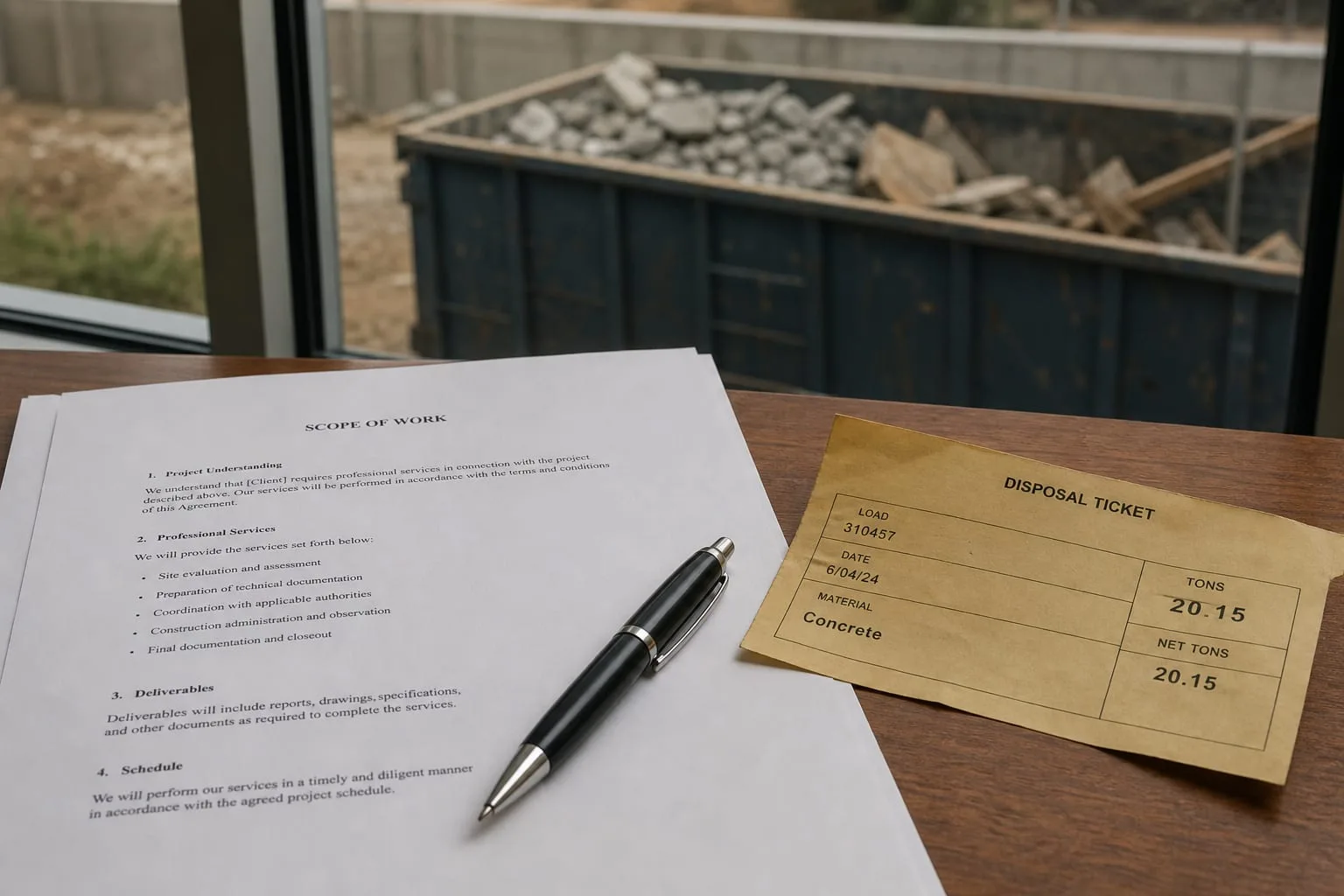
The instinct, when a quote arrives with an hourly rate on it, is to ask for a number instead. A single number feels like a lid on the thing. I have bought professional work in both shapes for years, mostly attached to jobs that produced debris of one kind or another, and the pattern I keep finding is that the fee structure does not decide what the work costs. It decides who absorbs the part nobody has looked at yet. That part exists in every engagement, and it gets paid for either way.
A fixed price is an hourly estimate with a cushion attached
Nobody prices a flat fee from thin air. Somebody sits down, guesses the hours, multiplies by a rate, and then adds a margin for the discovery that has burned them before: the missing records, the counterparty who will not answer, the second problem sitting under the first. That cushion is the product you are buying when you buy certainty, and on a clean job you pay for it and get nothing back. On a messy job it saves you real money. The question is not which arrangement is fairer. The question is whether your job is the clean one or the messy one, and you usually have a decent idea.
The person quoting has a better idea than you do, which is the part people skip. They have seen forty versions of your situation and yours has a shape they recognize. If a firm that normally works hourly offers you a flat number without hesitating, they have decided your job is predictable and they intend to finish it under the estimate. If they hedge, insist on hourly, or quote a fixed price that looks high enough to be insulting, that is information about your file rather than about their pricing philosophy.
Where the hours actually run away
Hourly work does not blow up because the rate is high. It blows up because the boundary of the job was never drawn, so every new question becomes billable and nobody is required to stop and tell you. I have watched a straightforward review turn into four months of correspondence, all of it defensible line by line, none of it moving toward a decision. The rate was never the problem. The absence of a threshold at which somebody had to pick up the phone and say the estimate no longer holds was the problem, and that threshold is a sentence you can ask for.
Put it in writing at the front: a written scope of the specific tasks included, a dollar figure at which work pauses for your approval, and a short status note at a fixed interval, monthly is fine. With those three things, hourly billing behaves. Without them, a flat fee is genuinely safer, not because it is a better structure but because it forces someone to define the job before the meter starts. Most people who ask for a fixed price are really asking for a defined scope and do not know that is the request.
What the job leaves behind, and who is holding it
I think about this the way I think about hauling. A demolition price is quoted on assumed tonnage, and the tonnage assumption is the whole contract. Pull up a floor and find two more underneath and the load doubles, and the argument that follows is never about the truck. It is about whose assumption that was. The same argument happens in a conference room when a document review turns up a second entity, an unrecorded agreement, an open assessment from a year nobody mentioned. Somebody has to carry that away, and the fee structure named them in advance.
There is also the category that cannot go in the dumpster at all. Old paint, solvents, anything with asbestos in it: the Environmental Protection Agency oversees how that material is handled and disposed of, and the disposal is a separate line with a separate cost, priced by the pound and never included in the demolition number. Professional work has the same category. The finding your accountant cannot simply set aside, the conflict your attorney has to withdraw over, the disclosure that has to be made once it is known. No fee arrangement makes those cheap, and the honest fixed-price quote excludes them by name.
The version of the question worth asking
So do not open with a demand for a flat number. Open by asking what part of the job they cannot see yet, what it has cost on similar files when it turned out badly, and what would have to be true for the estimate to double. A firm that has done this many times will answer plainly, because the answer is the same three things every time. Then choose. Fixed price when the unknown is large and you want it off your desk, hourly with a scope and a stop point when the file is clean and you would rather not fund somebody else's cushion.
The best engagement I have run was hourly with a written cap, a monthly note, and a clause that any new issue outside the listed tasks got quoted separately before anyone touched it. It came in under the fixed quote from the same firm by a comfortable margin. The structure did not do that. The scope did, and the scope is the document you should be negotiating.