Re:Legal
Six Weeks Without a Kitchen? The Evidence That Costs Nothing and the Evidence That Does Not
Dated4 min read
In a construction or contractor dispute, most of the evidence that decides it is free if you make it the same week, and expensive to rebuild later.
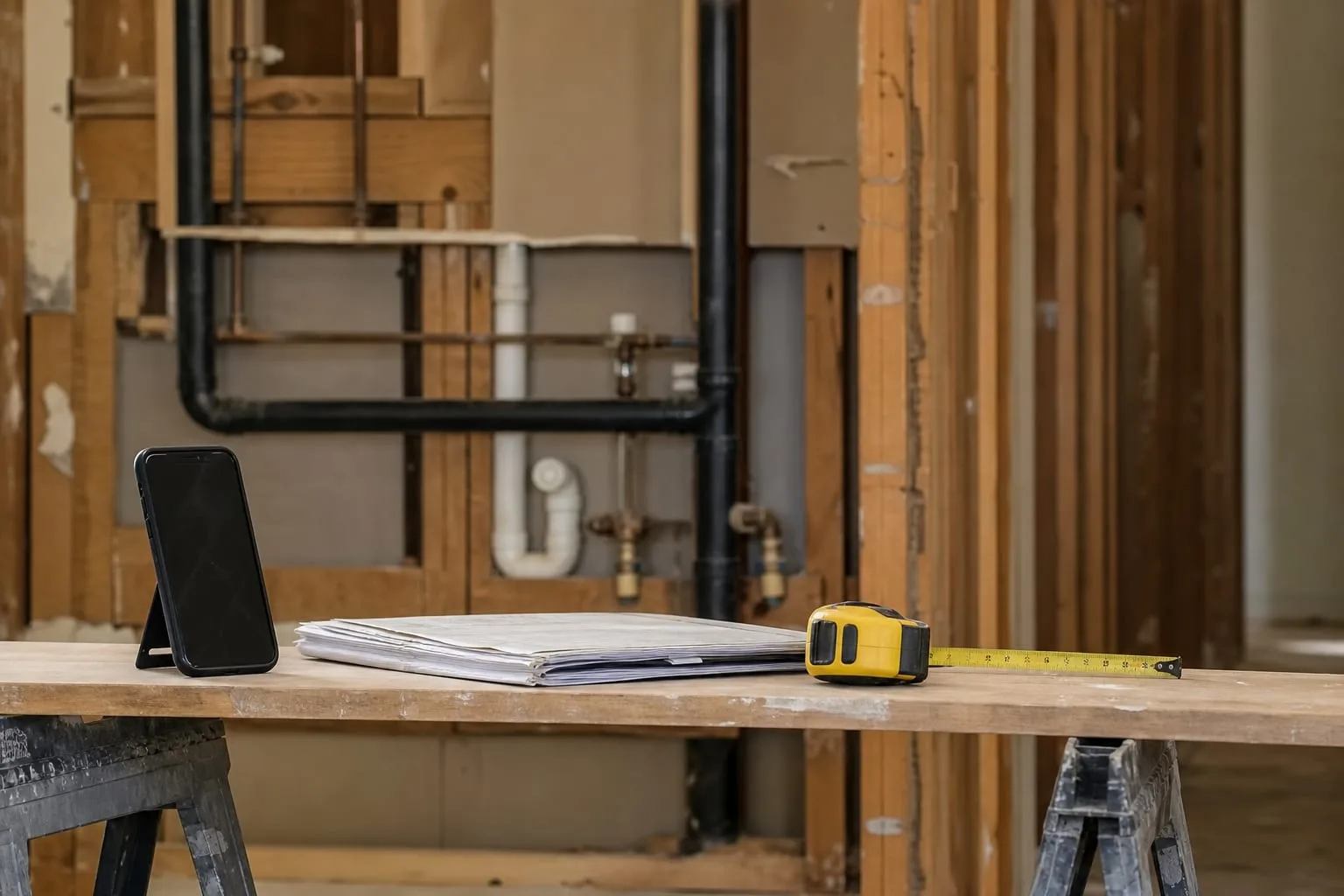
The household that wins a dispute over a botched renovation usually did most of the winning in week two, before anyone was angry, using a phone that was already in their pocket. That is the awkward part. The evidence that carries weight is cheap at the moment it is made and expensive to manufacture afterward, and the gap between those two prices is where most of the money in a contractor dispute goes. Nobody starts a kitchen job planning to build a file. But a file gets built anyway, badly, in text messages and half-remembered conversations, and the quality of that accidental file sets the ceiling on everything that follows.
The records that cost nothing are the ones made the same day
Living through a job means you already know what happened. The plumber came Tuesday, cut into the wall behind the sink, found the stack was cast iron and not what the estimate assumed, and there was a conversation on the driveway about who eats the difference. That conversation is the whole dispute. Written down that evening in six lines with a date on it, it costs you four minutes. Reconstructed nine months later from memory, under questioning, with the plumber remembering it differently, it costs whatever an attorney charges to take your deposition and it may not survive the process at all.
The habit that works is unglamorous and takes about five minutes a day. At the end of each working day, note who was on site, what hours, what got done, what got uncovered, and any decision that was made verbally. Then send the substance of the verbal decisions back to the contractor in a short email or text: confirming we agreed today that the extra stack work is billed at time and materials, cap of whatever was said. You are not being adversarial. You are creating a dated document that the other side had the chance to correct and did not.
Photographs are only as good as what is in frame with them
Everyone photographs the mess. Very few people photograph the mess in a way that survives a second reading by somebody who was not there. A close shot of a bad tile cut proves a bad tile cut exists somewhere in the world. The same cut shot with a tape measure in frame, then again from six feet back showing the doorway and the window, places it in your house and gives it a size. Original files off the phone carry a date and often a location in their metadata, which is why you should never send only screenshots, and never send only compressed copies through a messaging app.
Progress photography matters more than damage photography, which surprises people. If you shoot the same three angles of the room every Friday for the duration of the job, you have a sequence that shows when the framing was closed up, when the electrical was rough-inned, and whether the inspection actually happened before the drywall went on. A dispute over concealed work is nearly unwinnable without that sequence and nearly straightforward with it. The Friday photos cost you ten minutes a week and they are the closest thing to free money in this whole subject.
The tier you actually pay for, and what you get
Some evidence cannot be made by a homeowner, because the question is technical and your opinion of it does not count. Whether a slope is out of tolerance, whether a moisture reading behind a baseboard indicates an active leak, whether a beam is carrying what it was drawn to carry: these need somebody with credentials and a report. A home inspector, an engineer, a licensed trade contractor writing a second opinion on the failed work, each priced by half day or by report, and each cheaper than the argument you will have without one. Expect the engineer to cost multiples of the inspector, and expect both to be worth it when the repair number is large.
The second paid item is an hour of an attorney's time, read for structure rather than for a lawsuit. What you want from that hour is a list: which of your documents matter, which deadline governs, whether your state requires notice and an opportunity to cure before you can file anything, and what to stop doing immediately. The Federal Trade Commission is responsible for consumer protection enforcement at the federal level, but your practical remedies in a renovation dispute usually run through state contractor licensing law and small claims, and knowing which one applies is exactly what the paid hour buys.
What drives the bill up is delay and silence
Two things reliably multiply the cost. The first is delay, because reconstruction always costs more than recording, and because a wall that has been closed up has to be opened again to prove anything about what is behind it. Demolition to expose defective work, done twice, is a real line item. The second is the quiet stretch in the middle of a job, the four weeks when you were tired of the dust and stopped writing anything down, and the contractor's account of that period stands unchallenged because yours does not exist. Keep the daily note going through the boring weeks and the expensive part never starts.
Payment records do a similar job for almost no effort. Pay by check or card rather than cash, keep the schedule of values or the payment schedule from the contract next to the actual payments, and note what percentage of the work was complete at each draw. When a dispute turns to money, and it always does, the argument is about whether you paid ahead of the work. That is arithmetic, and arithmetic settles.
Six weeks without a kitchen is long enough to lose track of what was said in the third week, which is why the five minutes at the end of the day is the single highest-return thing a household does during a renovation. Keep it in one place, with dates, and the file will be there if you need it.