Re:Money
Sizing Down a Ring? Five Things to Check Before the Gold Leaves the Bench
Dated4 min read
Resizing, retipping and solder repairs all produce something the shop keeps or has to dispose of, and the rules for both differ sharply by state and city.
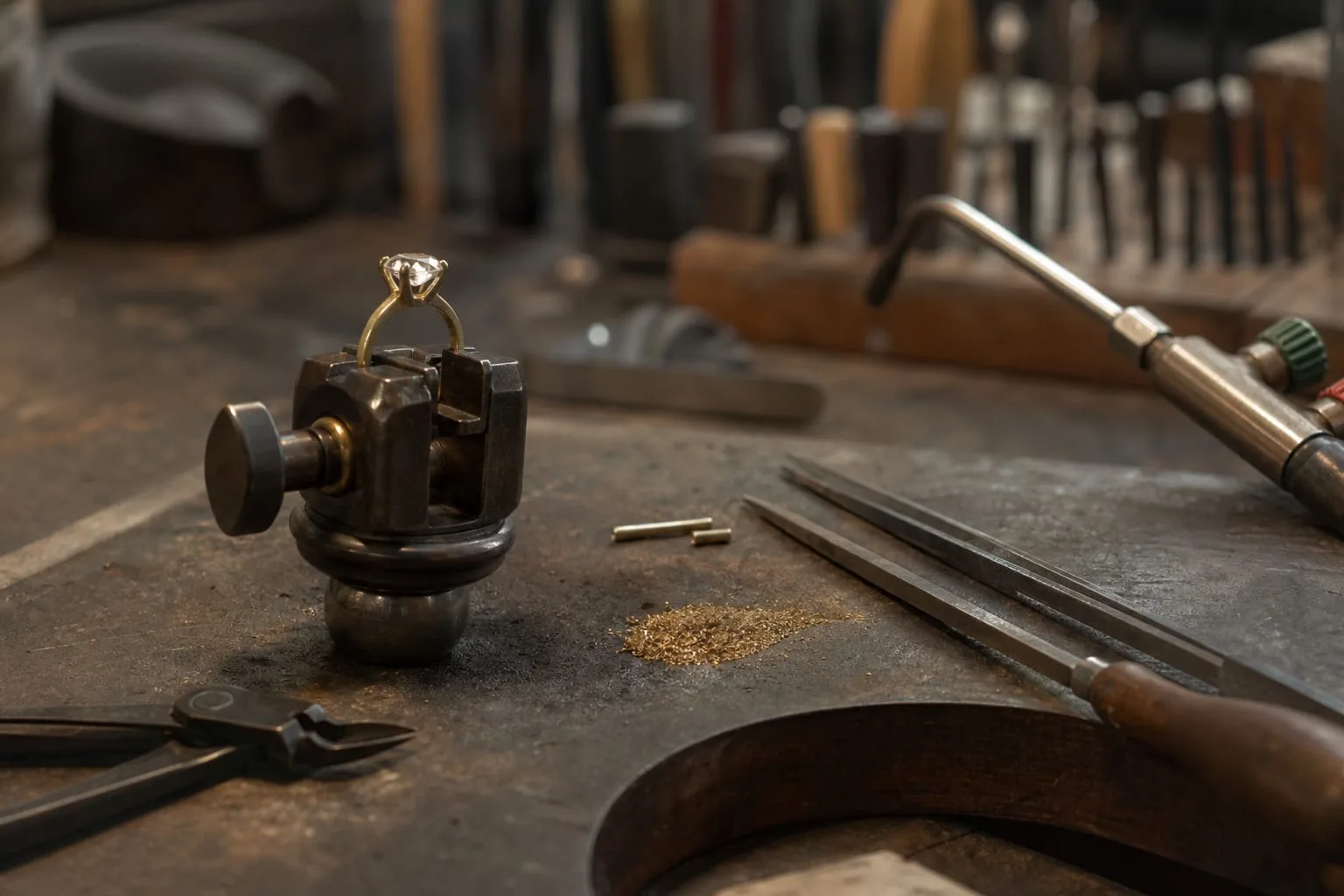
A ring sized from a seven to a five leaves the bench smaller than it arrived, and the difference does not evaporate. It sits in a drawer with the filings, the clipped shank ends, the old worn prongs and the sweepings from the polishing motor, waiting for enough weight to justify a shipment to a refiner. Most customers assume the job is purely labor, a matter of time and skill with nothing left over. There is always something left over, it has value or it has a disposal cost, and who bears each is decided partly by the shop and partly by the state you are standing in.
1. Ask who keeps the metal that comes out
Sizing down a plain gold band by two sizes can free a meaningful piece of alloy, and sizing up consumes new stock the shop buys at market. Reputable benches will credit the removed metal against the job, quote net, or hand the clippings back in an envelope if you ask before the work starts. Ask before. Once the piece is cut, the ends go into the lemel with everyone else's, and separating your fourteen karat from the next customer's is no longer possible. The refining return on shop sweepings is real money, and the only question is whether it was priced into your quote.
2. Check whether the shop can legally take the scrap
Here the local rule bites in a way most people never see. Many states regulate anyone who buys precious metal from the public, with registration, recordkeeping, a customer identification requirement and a hold period, often somewhere between ten and thirty days, before the material can be melted or resold. Those laws were written with secondhand dealers and pawn operations in mind, and a jeweler crediting you for your own clippings can land inside them depending on how the transaction is structured. It is why some shops will deduct the metal weight from the price but decline to write you a check for it.
3. Find out where the plating and pickle waste goes
White gold repairs almost always end in rhodium plating, and rhodium baths, along with the acid pickle used to clean solder joints and the ultrasonic solutions that strip polishing compound, are industrial waste when they are spent. The Environmental Protection Agency oversees hazardous waste handling for shops of this kind, and local sewer authorities add their own pretreatment limits on metals discharged to the drain, which is the reason a bench in one city plates in house while an identical bench two states away sends every white gold piece to a trade shop. That routing decides your turnaround. Ask whether plating happens on site, because a week can hinge on it.
4. Confirm how your state taxes the labor
Repair invoices do not read the same from state to state, and the difference is not the jeweler improvising. Some states tax repair services on tangible personal property outright, some tax only the materials such as solder, new shank stock or a replacement head, and some tax the whole ticket when the work is treated as fabrication rather than mending. A quote given over the phone as a labor figure can arrive noticeably higher once the correct rate is applied, and if you mail a piece across a state line the taxing jurisdiction may not be the one you expected. Get the estimate written with tax shown separately.
5. Decide what damage is worth heat, and what is not
The honest answer to whether a piece is worth fixing usually turns on how much heat it can survive rather than how much metal is missing. Worn prongs on a well made head are retipped in minutes and last another decade, while a cast shank that has thinned to paper is better replaced entirely than built up with solder that will crack in the same place. Emeralds, opals, tanzanite and anything with a fracture filling come out of the mounting first, or the work goes to a laser welder that keeps the heat inside a fraction of a millimeter. A shop that offers to unset before it offers to repair is telling you something useful.
What the leftovers tell you about the shop
Bench waste is a fair proxy for competence, because a shop that tracks its own lemel carefully, sweeps under the benches, files the plating records and knows which of its solutions cannot go down the drain is a shop that is also counting your metal accurately. Ask to see the estimate itemized: metal added, metal removed, plating, stone setting, tax. Ask what happens to the old head after it is cut off, and whether you can have it. The good answer is immediate and specific, because the person quoting has already priced it.
None of this requires you to become an expert in refining or in your state's dealer statutes. It requires two or three questions asked while the ring is still whole, in the order that puts the metal, the waste and the tax on paper before anything is cut. Shops that do this work well expect the questions and answer them briskly.