Skipped the Tub Caulk for Six Years? What It Costs in the Floor Below
Dated4 min read
One narrow joint in one second-floor bathroom, six years of patching over it, and what the opened floor showed about how tile work came to be built the way it is now.
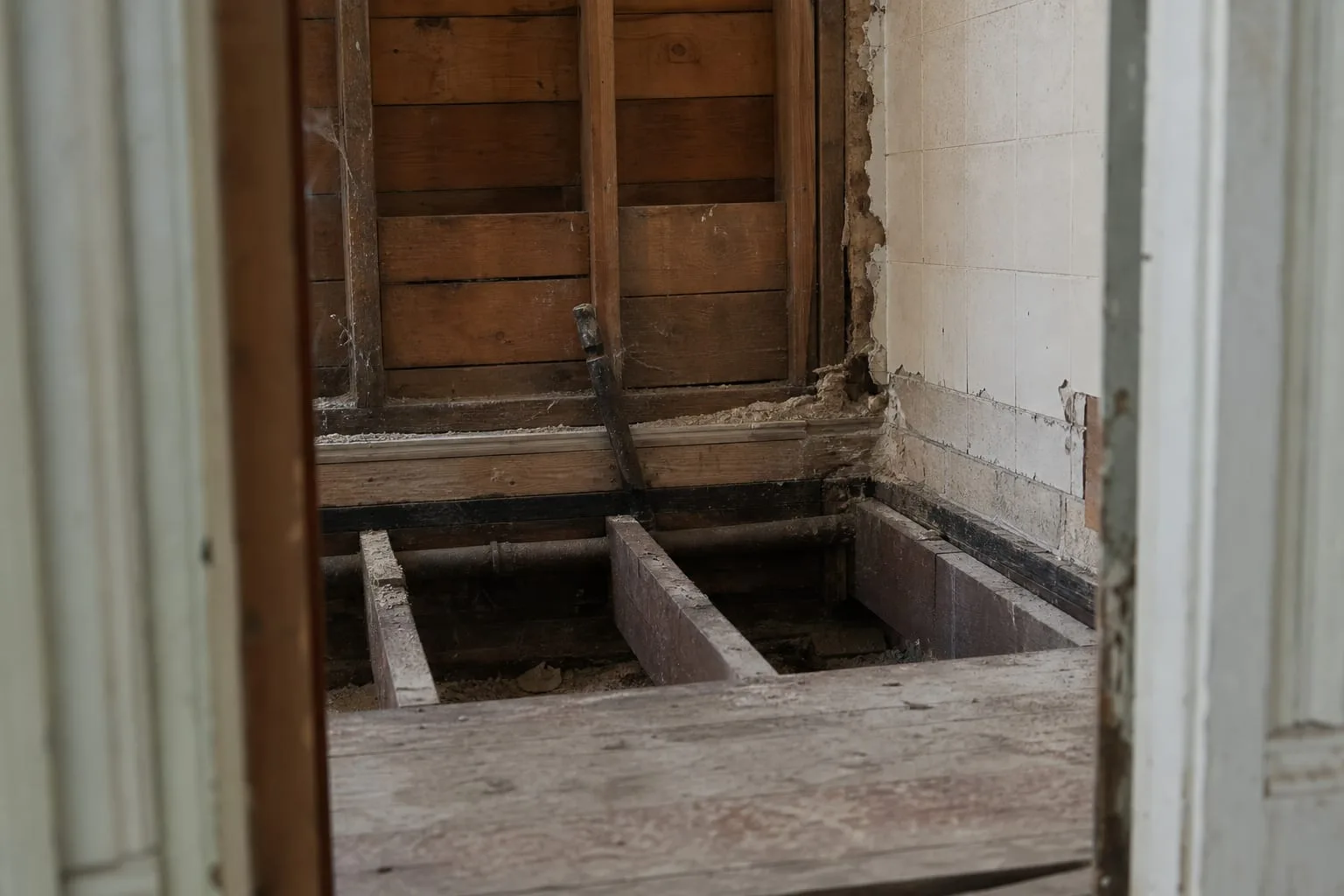
The house was a 1978 split-level with one full bathroom upstairs, and the joint in question ran about five feet along the back of a cast iron tub where the wall tile met the rim. It had been caulked at least three times, each layer applied straight over the last, the newest bead a bright white ribbon sitting on something gray and rubbery underneath. The owner had done this himself, in April, the way you touch up trim. What he never did was cut the old material out. That is the entire case, and everything that followed came out of it.
The one joint that was doing all the work
Grout is cement. It is hard, it does not stretch, and where two different materials meet and move at different rates, a tub filling with water and a wall that does not, grout will crack because it has no other option. The joint at the tub rim is supposed to be a movement joint filled with silicone, which stays flexible for years and then gives up in a predictable way, pulling away from one side in a thin dark line. Latex caulk, the paintable kind sold near the trim, will not survive standing water on a tub edge. What was in that bathroom was latex over latex over silicone, and none of the layers was bonded to anything.
Water does not need a gap you can see. It needs a path, and behind three layers of failed caulk there was a path the width of a business card running the length of the tub. Each shower put a small amount of water behind the tile. Most of it evaporated. Some did not.
What the floor showed once it was open
The plumber who pulled the tub found what anyone who does this work expects to find. The wall board behind the tile was gypsum, the water resistant green-faced kind that was standard in the late seventies and is no longer used in wet areas, and along the bottom eight inches it had gone soft enough to push a thumb through. Below that, the subfloor plywood had delaminated in a rough oval, and the top edge of one floor joist was soft to a screwdriver for maybe fourteen inches. Nothing had collapsed. Nothing had leaked through the ceiling below. The damage had been assembling itself quietly for six years at a rate too slow to announce.
The repair was therefore not a caulk job. It was a demolition of the tub surround, replacement of a section of subfloor, sistering of the joist, new backer board, new tile, and a new tub because a cast iron tub that comes out rarely goes back in. That is the compounding: a joint that costs a tube of silicone and an hour becomes a room stripped to framing.
Why the good tile setter said November
Three contractors were called in the same week. The first answered the phone, offered to come Thursday, and quoted a number over the phone before seeing the bathroom. The second did not answer and called back nine days later. The third came out, put a level across the tub deck, tapped the tile at the corners, and said he could start the second week of November, which was eleven weeks out.
An instant yes in a trade with real demand almost always means one of three things: the crew just lost a job, they are new and building a book, or they intend to work fast and light. Any of those can be fine. None of them is information you get from the yes itself. The eleven-week wait was the useful signal, and the follow-up questions confirmed it. He asked what was under the tile. He asked whether the ceiling below had ever been touched. He wanted the framing exposed before he priced the tile.
How the assembly changed underneath the finish
Tile in wet areas used to sit in a thick bed of mortar packed against metal lath, which was heavy, slow, skilled work and tolerant of a great deal of water. That gave way in the sixties and seventies to gypsum board, which was cheap and fast and, as this bathroom demonstrated, dependent entirely on the surface staying sealed. Cement backer board replaced it. Now the standard has moved again toward a bonded waterproof layer, either a liquid membrane rolled onto the board or a sheet membrane set in thinset, so that water reaching the substrate has somewhere to go and nothing to rot. The Environmental Protection Agency is the federal body responsible for guidance on indoor moisture and mold, and the direction of that guidance, keep assemblies dry and dry them fast when they get wet, is the same direction the tile trade moved on its own.
The new surround has a membrane behind it and a silicone joint at the tub. The owner now cuts that joint out and replaces it, one tube, every second spring, which is the cheapest scheduled maintenance in the house and the only reason the rest of it will hold.