Re:Money
Small Loss, Big Renewal? How the Claim Decision Changed in Ten Years
Dated4 min read
A decade ago a household weighed one repair estimate against a deductible. Now the debris, the roof's age and the loss history file all sit in the same decision.
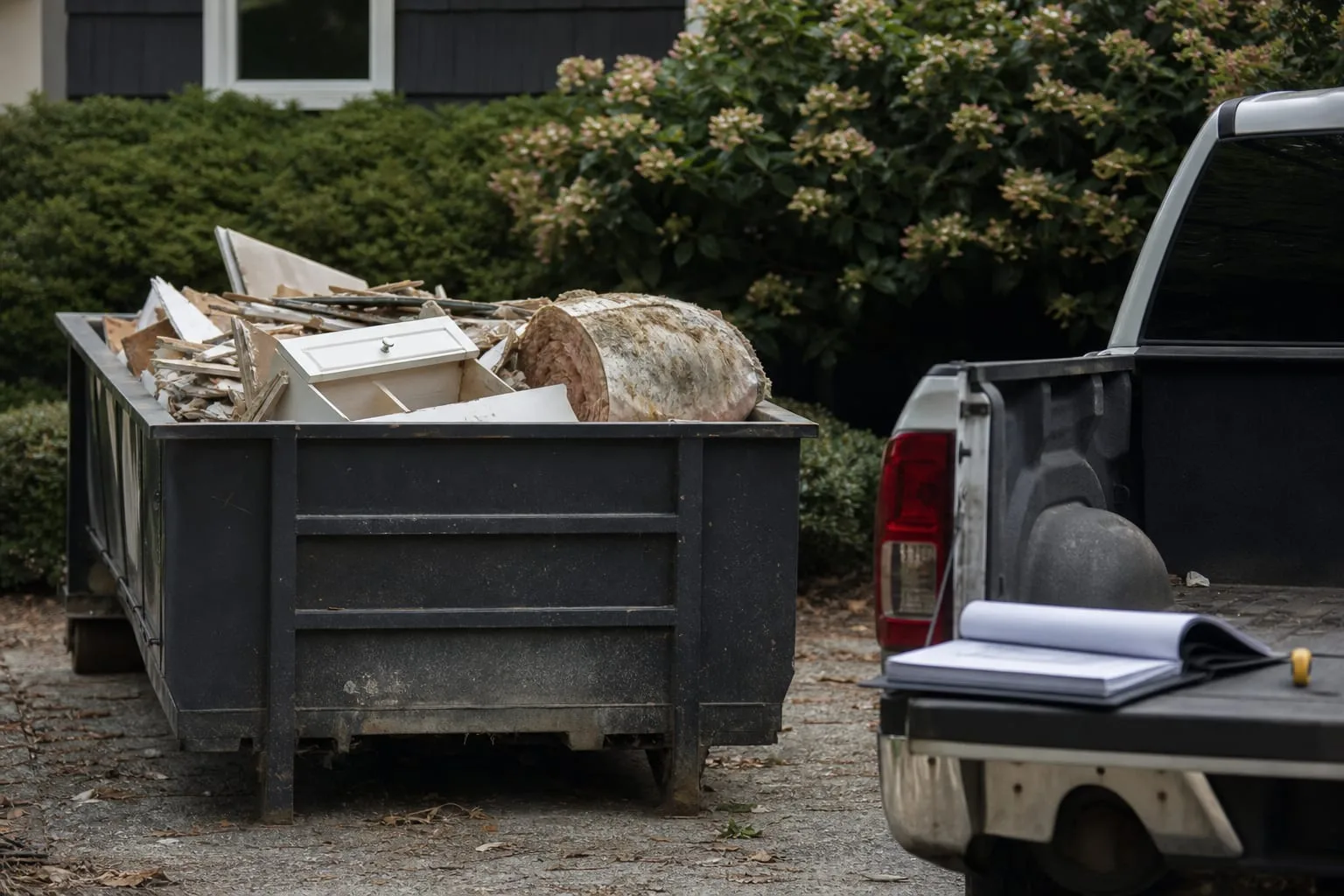
A supply line lets go under a second-floor bathroom on a Tuesday, and by Thursday a household is holding a contractor's estimate for eleven thousand dollars and a policy with a two thousand dollar deductible. Ten years ago that was one piece of arithmetic. Subtract, compare, call the agent or do not. The arithmetic now has more terms in it, and most of them are visible before anyone picks up a phone. The change is not that insurers became harder to deal with. It is that the record of a house, its roof, its prior losses, its claims history, became far easier for the next underwriter to read.
What the same Tuesday looked like a decade ago
The old version of this decision ran on paper and memory. A homeowner got one estimate, sometimes two, and the numbers covered the visible work: cut out the wet drywall, pull the vanity, dry the subfloor, repaint. Loss history existed in a shared database that carriers checked at application, but it was thin, and it went back a limited number of years. The practical rule of thumb passed around kitchens was simple enough. Do not file for anything under about twice the deductible, and do not file twice in three years. That rule was crude, and for a long time it was roughly right.
What it missed, then as now, was the second estimate that nobody asks for at the start: the cost of getting the wreckage out of the house. Wet drywall is heavy. A bathroom tear-out fills more of a dumpster than people expect, and the dumpster is rented by the week, not by the load. In a house built before the late 1970s, the flooring under the vinyl and the paint on the trim change the disposal question entirely. That part of the job has always been where the estimate quietly grows.
What actually changed by now
Three things moved. The shared loss history file got deeper and is pulled more consistently, so a claim in 2019 is still a data point at a 2026 renewal. Aerial and satellite imagery of roofs became routine, which means the age and condition of a roof are often known to an underwriter before anyone drives past. And the policy forms themselves changed, with separate percentage deductibles for wind and hail in many states and schedules that pay actual cash value on an older roof rather than replacement cost. None of that makes claiming a bad idea. It makes the decision one you can actually model in advance.
There is a fourth change, quieter and useful. Because carriers now see more, they distinguish more. A single water loss with a documented repair, a photographed shutoff valve replacement and a receipt for the new supply lines reads differently from a water loss with no follow-up. Ten years ago the file recorded that something happened. Now the file has room to record that you fixed the cause, and a household that documents the fix is answering the question the next underwriter was going to ask anyway.
The debris is part of the claim, and it has its own rules
Most homeowners policies pay to haul away the debris created by a covered loss, usually as a sublimit expressed as a percentage of the dwelling limit rather than an open-ended promise. That sublimit matters more than it used to, because disposal costs more than it used to. A mixed construction and demolition load goes to a transfer station by weight, tipping fees have risen in most metropolitan areas, and some materials cannot ride along at any price. Old resilient floor tile and its black mastic, popcorn ceiling texture in a house of a certain age, and lead-painted trim all require testing and, if positive, a licensed abatement contractor working under a separate scope.
The Environmental Protection Agency is responsible for the federal rules governing how asbestos-containing material is handled and disposed of, and for the recovery of refrigerant from an air conditioning condenser or a wrecked heat pump. Those rules are the reason a hail claim that includes an outdoor unit cannot end with the unit at the curb. For a household, the practical takeaway is that the tear-out and haul-away line on an estimate is not padding. It is the line most likely to be understated, and it is the line that turns a claim you were going to absorb into one worth filing.
Running the numbers before you make the call
Get the full scope in writing first, including demolition, dumpster rental, tipping fees and any testing the contractor recommends for a pre-1980 house. Compare that total to the deductible, and if wind or hail is involved, check whether your deductible is a flat dollar figure or a percentage of the dwelling limit, because the two can differ by thousands. Then ask your agent, in plain terms, whether a question about coverage is logged as a claim or as an inquiry in your state. The answer varies, and it is a fair question to ask directly rather than guess at.
Timing is the last term. A loss reported two months before renewal and a loss reported two months after renewal land in the same file eventually, so do not delay reporting a real loss to dodge a date; late notice is a far bigger problem than a rate change. What you can control is the record. Photograph the failed component, keep the plumber's invoice for the permanent repair, and keep the disposal receipts. That folder is what turns a claim into a closed chapter rather than an open question at the next renewal.
The households that come through this well are not the ones who guessed right about whether to file. They are the ones who priced the whole job, debris included, before deciding, and who kept the paperwork proving the cause was cured.