Re:Legal
Ten Yards of Debris and a Disputed Invoice. How to Know When to Settle
Dated4 min read
The rules that govern a construction or cleanout dispute set the real settlement range long before anyone talks numbers, and the debris is usually the evidence.
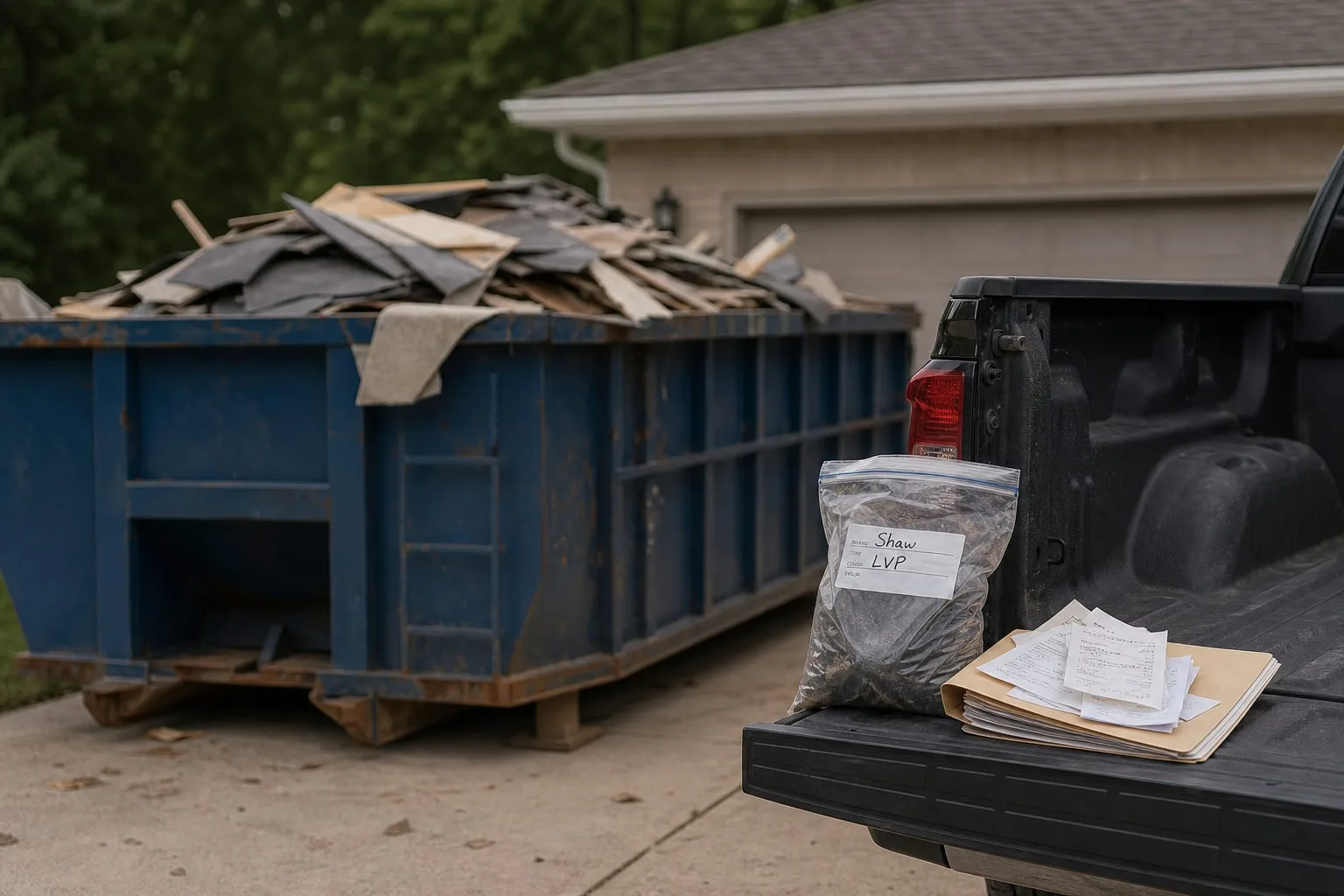
The disputes that settle cleanly and the ones that grind on for a year rarely differ in merit. They differ in what is left on the property. A job that ends badly leaves a physical record: half a pallet of the wrong tile, a bin of demolition waste nobody has hauled, a stack of underlayment that was supposed to be sixteen sheets and is eleven. That material is both the evidence and a running cost, and the person paying to store it is usually the person losing patience first. Anyone who has worked through several of these learns to read the pile before reading the contract.
The evidence leaves in the same truck as the trash
A dispute over workmanship is a dispute about something you can hold. Once the tear-out is hauled to a transfer station, the argument becomes two people describing a room from memory. Experienced parties slow that down. They photograph the failure in place with something in frame for scale, they keep a cut section of the failed material in a labeled bag, and they hold the weigh tickets and the disposal receipts, because those documents establish volume, date and who paid. Courts take a dim view of a party who destroys the thing in question. Keeping it costs a few dollars in bin rental and buys leverage that no affidavit reproduces.
Some of what a bad job leaves behind cannot be handled casually at all. Pre-1980 flooring, mastic, pipe wrap and certain siding may contain asbestos; paint on an older house may be lead-bearing; a torn-out kitchen can produce ballasts and lamps that belong in a hazardous stream rather than a roll-off. The Environmental Protection Agency oversees how those materials are handled and disposed of, and a contractor's failure to follow that path is a separate and much cleaner claim than an argument about whether tile is level. If the disposal was done wrong, say so early. It reframes the whole negotiation.
The rules that set the range before anyone names a number
Most homeowners open a dispute believing the range runs from zero to the full cost of doing the job again. It almost never does. Many states have a right-to-repair statute requiring written notice and a defined opportunity for the contractor to inspect and fix before a suit can proceed, and skipping that step can stall a case that was otherwise strong. Contracts signed with a residential remodeler often carry an arbitration clause, which changes the forum, the timetable and the cost. State licensing boards run complaint processes, and some administer recovery funds with their own caps and filing windows. Each of these compresses the plausible outcome long before a dollar figure is discussed.
Then there are the deadlines. A mechanic's lien has a short filing window measured from last furnishing of labor or materials, and once recorded it puts real pressure on a sale or refinance. Statutes of limitation for breach of contract and for construction defect run on different clocks in different states. Small claims jurisdictions have a ceiling, and a claim trimmed to fit that ceiling can be resolved in a morning without an attorney. Knowing which deadline arrives first, and whose it is, tells you who has to move and roughly when they will.
The arithmetic that decides it
Settlement math is not the disputed amount against the offer. It is the offer against what remains after the cost of proving the claim comes out. That cost includes an independent inspection, a written estimate from a replacement contractor, possibly a moisture reading or a lab sample, hours away from work, and the carrying cost of a house that cannot be finished while the argument runs. It also includes disposal you will pay for regardless. Hauling ten yards of demolition waste costs the same whoever is at fault, and the bin sitting in the driveway accrues rent by the week.
Run that subtraction honestly and the range narrows fast. If the delta between the offer and the realistic recovery is smaller than the cost of pursuing it, the decision has already been made and only pride is holding the file open. Where the gap is genuinely large, or where the defect is structural, hidden or involves a regulated material, the calculation flips and the expense of proof is worth carrying. The point is that the number worth accepting is knowable, roughly, in an afternoon with two estimates and a calendar.
What the paper has to say before you sign it
A settlement is only as good as its release. Read what is being released: this dispute, or every claim arising from the project, known and unknown. Those are very different documents, and the second one closes the door on a defect that surfaces two winters later. Set out who removes the remaining material and by what date, because unhauled debris left to the homeowner is a real cost quietly transferred at the last moment. Fix the payment date and the method. Decide whether any lien is released on payment or on signing, and get the release recorded. No admission of fault is standard and worth conceding without argument.
The parties who settle well tend to be the ones who did the boring things early: notice in writing, dated photographs, receipts kept, the failed material bagged and labeled in the garage. That work does not just support a lawsuit. It produces a credible number, and a credible number is what gets an offer that is worth taking.