Two Crews, Same Wet Hallway. What the Thorough One Does in the First Two Days
Dated4 min read
A good dry-out and a barely adequate one look identical from the driveway; the difference is in the meters, the baseboard, and the log nobody asks for until later.
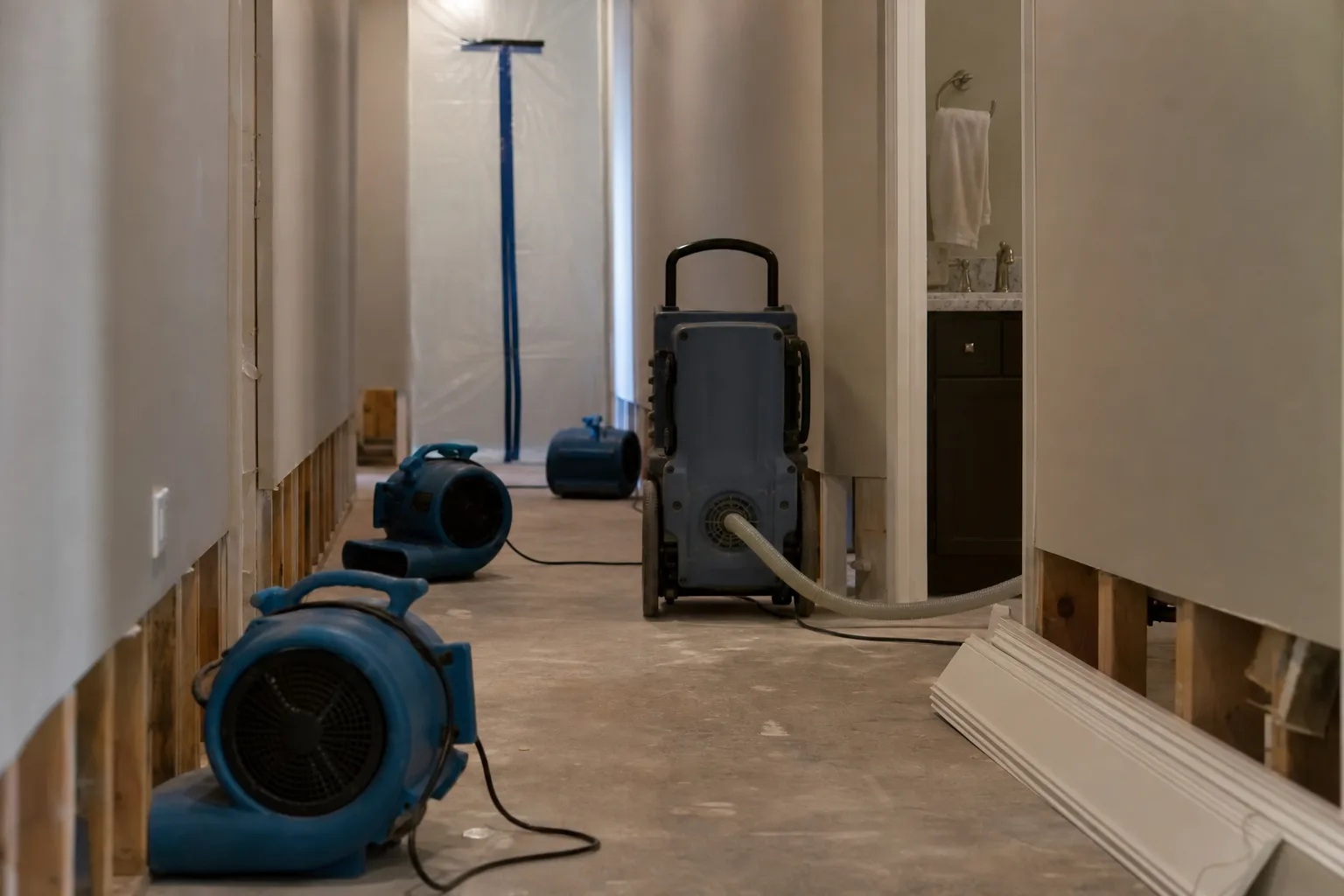
The crew that arrives at ten at night and the crew that arrives at ten the next morning will both set fans down, and from the end of the driveway the two jobs look the same: hoses out the side door, a van with a name on it, a hallway you cannot walk through in socks. The difference shows up in week three, when either the baseboard goes back on and the house smells like a house, or a wall starts to bloom and someone has to open it a second time. Most of what decides that happens in the first forty-eight hours, and a good part of it is visible to you while it happens.
The first hour is measurement, not movement
A thorough technician does almost nothing for the first thirty or forty minutes except walk the house with instruments. A pin meter for direct readings in wood and drywall, a pinless meter for scanning across a floor without perforating it, sometimes a thermal camera to find the cool edges where evaporation is still happening behind paint. He should be reading dry areas too, in rooms the water never reached, because the only way to know when something is dry is to know what dry looks like in that particular house, with that particular plaster and that particular subfloor. If someone starts hauling in air movers before any of that, you are watching a guess.
Ask what the water was, and listen to how the answer is framed. Clean supply line, washing machine drain, and sewage are three different jobs with three different rules about what can be dried in place and what has to leave the building. Category matters more than volume. A quart of the wrong water in a bedroom carpet is a bigger problem than forty gallons of supply water on tile, and a crew that treats them the same is applying one playbook to every call. The Environmental Protection Agency oversees guidance on indoor moisture and mold, and the distinction between drying a material and discarding it runs through all of it.
What gets opened, and what gets left shut
Here is the single clearest tell. Water travels under baseboard and sits in the cavity between the drywall and the bottom plate, wicking upward through gypsum like a paper towel standing in a saucer. A barely adequate job dries the room air and the carpet face, declares the surface readings acceptable, and leaves the cavity sealed. A thorough one pulls the base trim, drills a line of small holes above the plate or cuts a two-inch relief strip, and pushes dry air into that space with a cavity drying system. The trim comes off in one piece if the technician cares, numbered on the back, ready to go back on.
The same logic applies downward. Carpet pad is a sponge that will not release water on any schedule you can live with, and in almost every soaking it comes out, while the carpet above it may be floated, dried, and reattached. Wet fiberglass batt insulation inside a wall is finished as insulation whether or not it eventually dries. Laminate flooring swells at the seams and does not come back. A good crew tells you on day one which materials are coming out, and it tells you without hedging, because the list changes what your house is going to feel like for the next month.
Equipment, placement, and the number nobody explains
Air movers do not dry anything by themselves. They lift moisture off surfaces into the air, and a dehumidifier, usually a low grain refrigerant unit the size of a small dresser, pulls it back out and sends it down a hose to a drain or a sink. The ratio between the two is the whole engineering problem: too many fans and too little dehumidification, and you have simply moved water from your subfloor into your drywall upstairs. Count the units. Three air movers in a hallway with no dehumidifier running is a crew that owns fans.
Placement is equally specific. Air movers go at a shallow angle along the wall so the air sheets around the perimeter rather than colliding in the middle of the room, and they get repositioned on each visit, not left where they landed. The dehumidifier sits in the contained space with the doors closed, not in the open stairwell with the whole house bleeding into it. Plastic sheeting and a zipper door are cheap, and containment is the difference between drying one hallway and conditioning four thousand cubic feet of unaffected air for a week.
The log, and living around the machines
Every day, the technician should take readings at the same marked points and write them down, with temperature and relative humidity inside the containment and outside it. That sheet is the thing your adjuster will read months later when someone asks why the drywall was cut. It is also how you know the job is converging rather than stalling: the numbers should step down, and when a point stops dropping, that is the conversation about opening something further. Ask for a copy at the end of each visit. Nobody good objects.
Then there is your side of it. The machines are loud, somewhere around the noise of a window unit stuck on high, and they run all night, and they put heat into the house, which is why the thermostat fight starts on day two. Plan for it. Move the sleeping arrangements before you are exhausted, decide which door stays zipped shut, warn whoever works from home that calls happen in the car. A household that has decided these things in advance stops negotiating with the equipment and lets it work.
Two days is a short window to judge a contractor, but it is long enough. Watch for the meter before the fan, the trim pulled rather than pried, the dehumidifier hose actually running to a drain, and a sheet of numbers handed over before the van leaves.