Re:Careers
Two HVAC Techs, One Opening, and the Certification Card That Settled It
Dated4 min read
A four-truck service company filled one seat and learned that the card a tech carries decides what the shop can legally haul away at the end of the day.
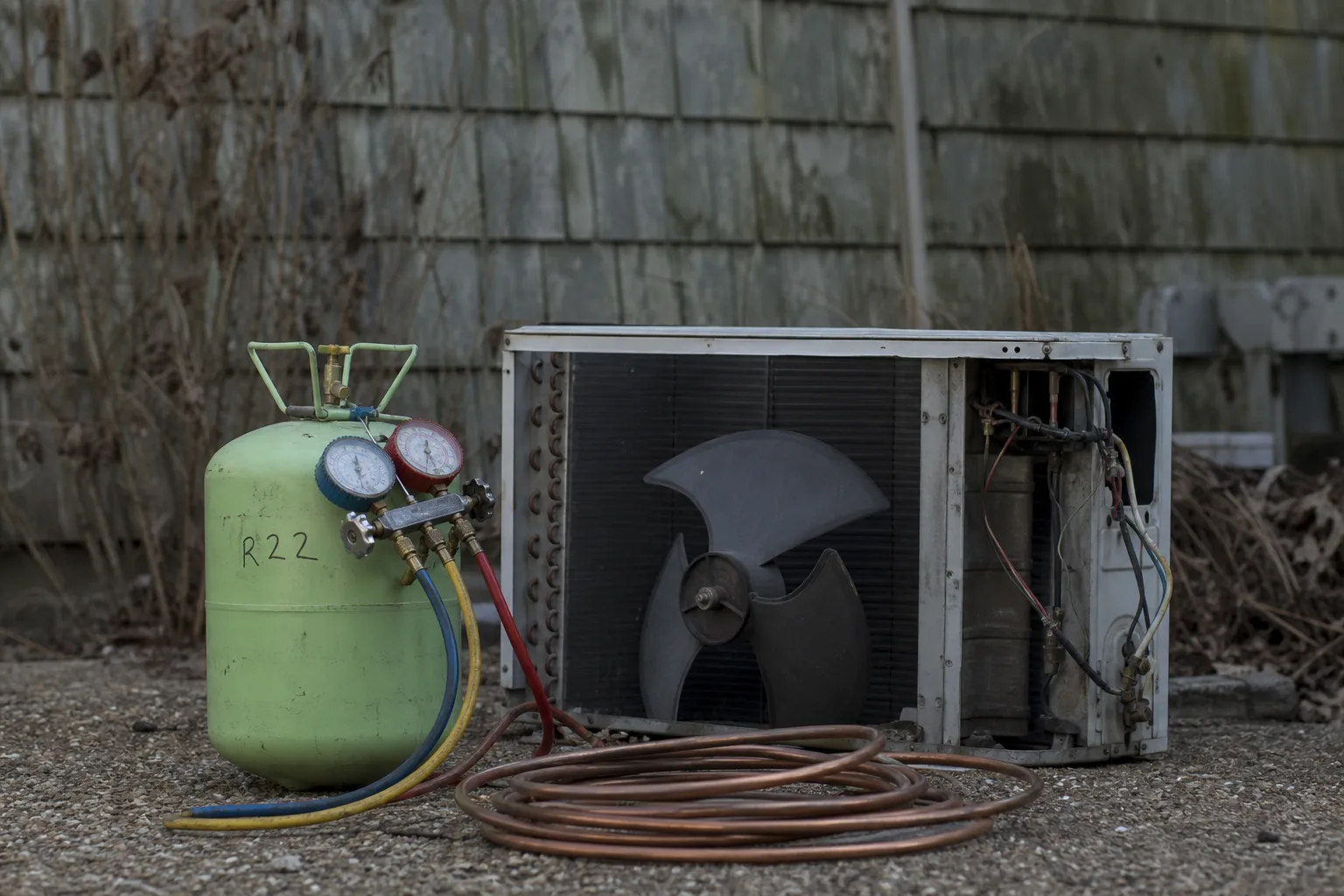
A four-truck residential service company outside a mid-sized city had one opening and eleven applications, which is a comfortable position until you start reading them. The owner was replacing a tech who had been with him nine years and who had, without anyone ever framing it this way, been the reason the shop's refrigerant recovery cylinders came back labeled, weighed and segregated. Two candidates made the short list. Both said HVAC technician. Both listed EPA certification. One of them got the job on the strength of a document that took thirty seconds to verify, and the difference between them was not attitude or years.
The two folders on the desk
Candidate A had six years with a large commercial mechanical contractor, a card showing EPA Section 608 Universal, and a laminated wallet copy plus the certifying organization's record he could pull up on his phone. Candidate B had eight years, better references from homeowners, and a photograph of a certificate with a date and a logo on it. Asked which type he held, he said he was pretty sure it covered everything, because he had taken the whole test. The owner asked what type of equipment a Type III covered. Candidate B guessed rooftop units. Type III is low-pressure, meaning chillers, and the guess was not close.
That answer mattered less as trivia than as a signal about what the man had been allowed to touch. Section 608 divides certification by equipment class: Type I for small appliances, Type II for high-pressure systems including nearly all residential split systems, Type III for low-pressure, and Universal for all three. A tech who has never had to think about which type applies has generally been working alongside someone who held the card and signed for the work. That is a fine way to learn. It is not a qualification an employer can put on a job ticket.
What the card actually authorizes
The Environmental Protection Agency is responsible for the rules governing refrigerant handling, recovery and disposal, and the certification is the mechanism by which a person is permitted to buy regulated refrigerant and to open a sealed system. The practical consequence for a small shop is narrow and expensive. Without a certified tech on the truck, the company cannot legally purchase the refrigerant it sells, cannot recover what comes out of a system being replaced, and cannot sign the record of what was recovered and where it went. Everything downstream of that, including the scrap value of the old equipment, depends on it.
Owners sometimes treat the card as a formality because the test is not long and the study material is thin. That reading survives right up until a supply house declines a purchase, or a scrap yard refuses a condenser that arrives with the service valves still holding pressure. The card is not a credential about skill. It is a permission, attached to a named person, that the company borrows every time that person is on a job.
The difference shows up at the end of the day
Follow the truck back to the yard and the gap between a good job and a barely adequate one becomes physical. A good changeout leaves the old condenser drained, evacuated to the vacuum the job calls for, tagged with the date and the technician's name, valves capped, with the recovered charge in a labeled recovery cylinder that has a current hydrostatic test date and is not filled past its limit. A barely adequate one leaves a unit with residual charge, a cylinder holding mixed refrigerants that no reclaimer will buy back, and a line set coiled in the bed of the truck with oil dripping out of it.
Mixed refrigerant is the specific failure that costs money rather than conscience. Once R-410A and R-22 share a cylinder, the contents are no longer a recoverable commodity with a resale value and become a disposal item the shop pays to be rid of. The old copper, cleanly separated, is worth something at the yard. The compressor oil is not, and cannot go into the shop's waste oil drum without being accounted for separately. None of that is taught in the certification exam. All of it is downstream of whether the person on the truck understands why the exam exists.
How the job ad was rewritten
The owner hired Candidate A and then went back to his posting, which had said EPA certified required, and changed it to something a candidate could not fudge: Section 608 Type II minimum, Universal preferred, certification number to be supplied at interview and verified with the certifying organization before an offer. He added one line asking the applicant to describe how they handle a recovery cylinder that has been used on a mixed system. The second question filtered harder than the first, because it separated people who had done the work from people who had watched it.
Candidate B was not a bad tech. He sat for Universal that fall, at the applicant's own cost and roughly the price of a service call, and the same owner called him when the next seat opened. The intervening months were the cost of having carried a photograph of a certificate instead of a number that could be looked up.
Any qualification worth listing on a resume has a verifiable record behind it and a specific thing it permits you to do that an uncertified person cannot. When an employer asks which type, the question is not a trap. It is the fastest way to find out what the person has actually been holding in their hands.