Re:Legal
Who Answers the Phone Before the Lawyer Does, and How That Call Decides Your Bill
Dated4 min read
A practitioner explains how intake staff, unbundled services and the clerk's window came to decide which problems need an attorney and which ones do not.
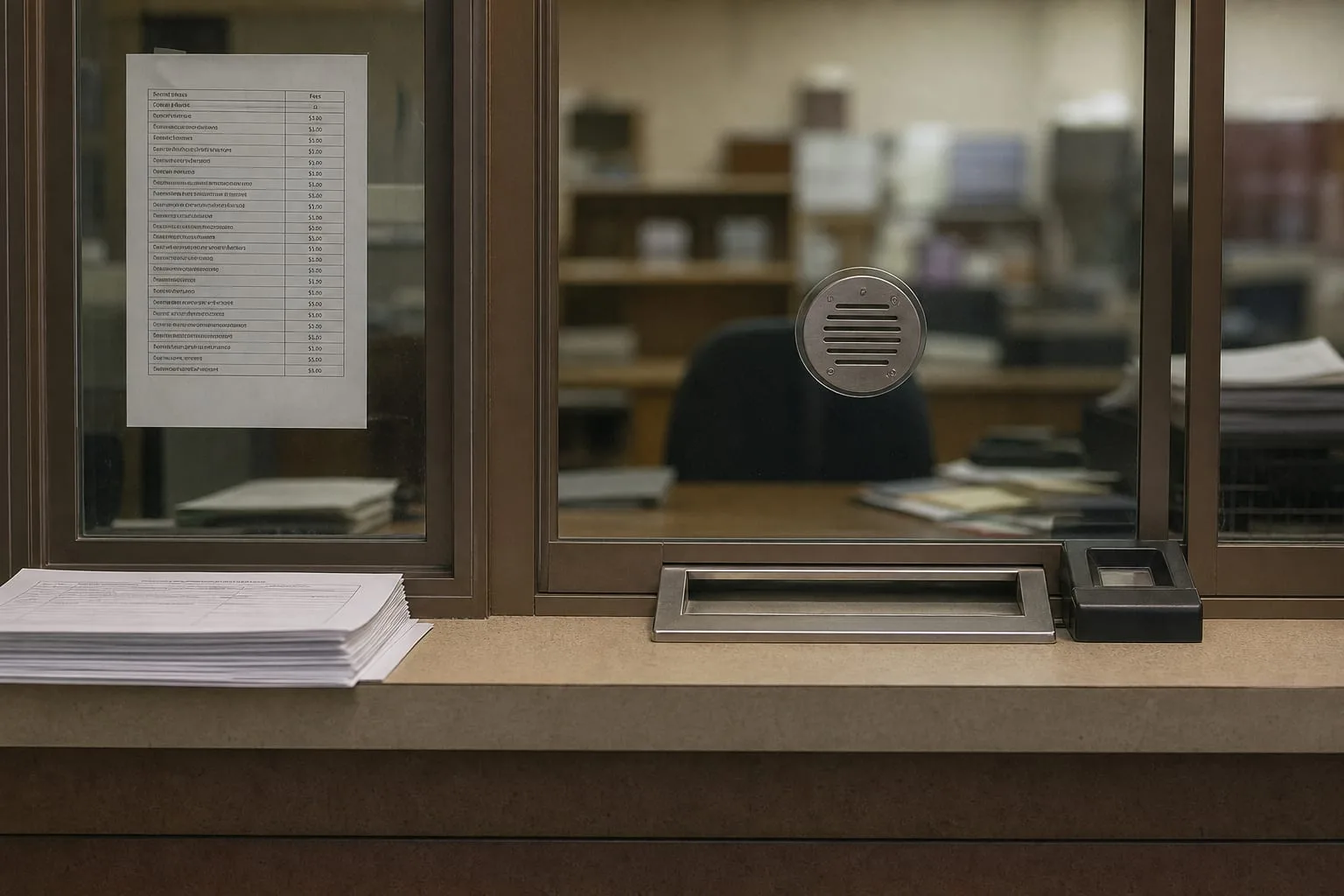
Call a law office with a problem and the first voice you hear is almost never a lawyer. It belongs to an intake coordinator, a paralegal, or in a two-person shop the person who also runs the billing, and the four minutes you spend with that person shapes your cost more than anything you say later. I spent an afternoon with a practitioner in solo civil practice in a midsize city, who agreed to talk about triage on the condition of being described by role rather than name. Most of what follows is about the people you are not thinking about when you dial.
The screen that happens before anyone quotes you an hour
When did the first call stop going to an attorney?
"Gradually, and for boring reasons. An hour spent listening to a problem I cannot take is an hour I cannot bill, and there are only so many of them in a week. So the screen moved down the hall. My paralegal has heard a thousand versions of the same six problems and can tell in three questions whether this one has a deadline attached, whether there is money on the other side worth chasing, and whether the client has the paper. The paper is usually the deciding factor. No contract, no photographs, no dates, and the case is a story rather than a claim."
Does the caller know they are being screened?
"Rarely, and that is the part I would change. People think they are leaving a message. They are actually giving the only account of the facts that anyone in the office will hear until a file is opened, and they bury the important thing at the end because they are embarrassed about it. The embarrassing fact is almost always the one that matters. If you signed something, say so in the first sentence. If you already sent an angry email to the other side, say that too, because it exists whether or not you mention it."
How unbundling changed which problems need a lawyer at all
The advice-only appointment is common now. It was not always.
"For a long stretch the model was all or nothing. You either retained a firm and it handled everything, filings, service, correspondence, hearings, or you were on your own with a library card. That collapsed under its own arithmetic. Most household disputes are worth a few thousand dollars, and nobody sane pays full representation to recover that. State bars worked through limited scope rules over a couple of decades, and now I can sell you one hour, review your draft, tell you which of your three arguments is real, and let you go do the filing yourself. That was not an obviously permissible service once."
Which problems moved out of the lawyer's column because of it?
"Small claims, most of the time. Security deposit disputes. A contractor who took a deposit and vanished, if the amount fits the court's limit. Debt collection letters, where the fix is usually a written dispute sent the right way rather than a lawsuit, and where the Consumer Financial Protection Bureau is the body responsible for consumer financial complaints if the collector keeps going. Uncontested name changes. Simple demand letters, which people overrate. A demand letter on letterhead is worth something, but the same facts in your own words, sent certified, does most of the work for the price of postage."
The clerk's window, and why it is the part people skip
You keep coming back to the courthouse staff.
"Because they are the party in this transaction nobody counts. A clerk cannot give you legal advice and will say so, firmly, if you push. But a clerk can tell you the form number, the filing fee, how many copies, whether your county wants service by sheriff or by certified mail, and whether the thing you are holding will be rejected at the counter. That is a large share of what people pay lawyers to know. Many courts now run self-help centers with staff whose whole job is procedure. Going there first costs a morning."
What does that morning save?
"It converts an open-ended engagement into a specific question. Walking into my office saying my neighbor built on my line is a project. Walking in with the parcel numbers, the recorded deed, the date the fence went up and the county's filing requirements is a ninety minute consultation with an answer at the end. The clerk did not advise you. The clerk handed you the frame, and I am left with the part that actually requires judgment, which is the part worth my rate."
What an instant yes usually means
The good ones are booked. How should someone read a fast yes?
"Read it as information about their calendar, not about your case. A firm with capacity in a busy practice area either just finished something large, which happens, or takes everything and sorts it out later. Ask directly how many matters like yours they closed last year and what the last one cost, start to finish. A practitioner who does this work has that number close at hand. The hesitant answer is often the honest one. I have told people their problem is too small for me and too small for anyone, and that the courthouse is their better option."
And the problems that do not compress?
"Anything with criminal exposure. Anything where a signature transfers property or waives a right permanently. Anything where the other side already has assigned counsel, because an insurer's lawyer is not negotiating with you as a peer. Anything with a statutory deadline you cannot move, and there are more of those than people expect. Business formation past the simplest case. Custody. If your problem sits in that group, the hour you spend shopping for a cheaper structure is an hour off the clock you actually have."
The practical upshot is that the decision is no longer binary, and it has not been for some time. Between doing nothing and retaining a firm sits a real middle: a paid hour, a reviewed draft, a self-help center, a paralegal who tells you honestly that your matter belongs at the counter downstairs. Ask for that middle by name when you call, because the person answering knows exactly where it is.